When someone searches for a dentist in Noida, a salon in South Delhi, or a digital marketing agency in Delhi, they usually want a business that serves that particular area. Appearing in these searches can help businesses attract relevant visitors, phone calls, and enquiries.
Local SEO marketing focuses on improving a business’s visibility in location-based searches on Google Search and Maps. It involves more than adding city names to website content. Accurate business information, useful service pages, customer reviews, and a credible online presence all contribute to a strong local search strategy.
What is Local SEO Marketing?
Local SEO is the process of improving a business’s online presence for searches connected to a specific geographical area. It helps potential customers find nearby businesses when they search for particular services, products, or places.
For example, someone searching for “AC repair service in Dwarka” wants a provider that serves that area. Google uses information about the business, its services, and its location to identify relevant results.
Local SEO is particularly useful for restaurants, clinics, retail shops, professional service providers, home repair companies, and businesses serving customers in specific cities.
How Does Google Determine Local Search Rankings?
Google uses several signals to decide which businesses are relevant to a local search. Its official guidance identifies three main factors: relevance, distance, and prominence. Understanding these factors helps businesses focus on the improvements that matter.
Relevance: Does Your Business Match the Search?
Relevance refers to how closely a business matches a customer’s search. Your business category, services, website content, and Google Business Profile should clearly describe what you offer.
Distance: How Close Is Your Business?
Distance refers to how far a business is from the searcher’s location or the place mentioned in the query. A shop in Lajpat Nagar may appear for nearby searches but have limited visibility in distant areas.
Prominence: How Well-Known Is Your Business?
Prominence describes how well-known a business is. Customer reviews, links, and other information available online can contribute to its reputation.
Google does not publish a fixed ranking formula, and no business can pay for a better organic local ranking.
8 Effective Local SEO Marketing Strategies
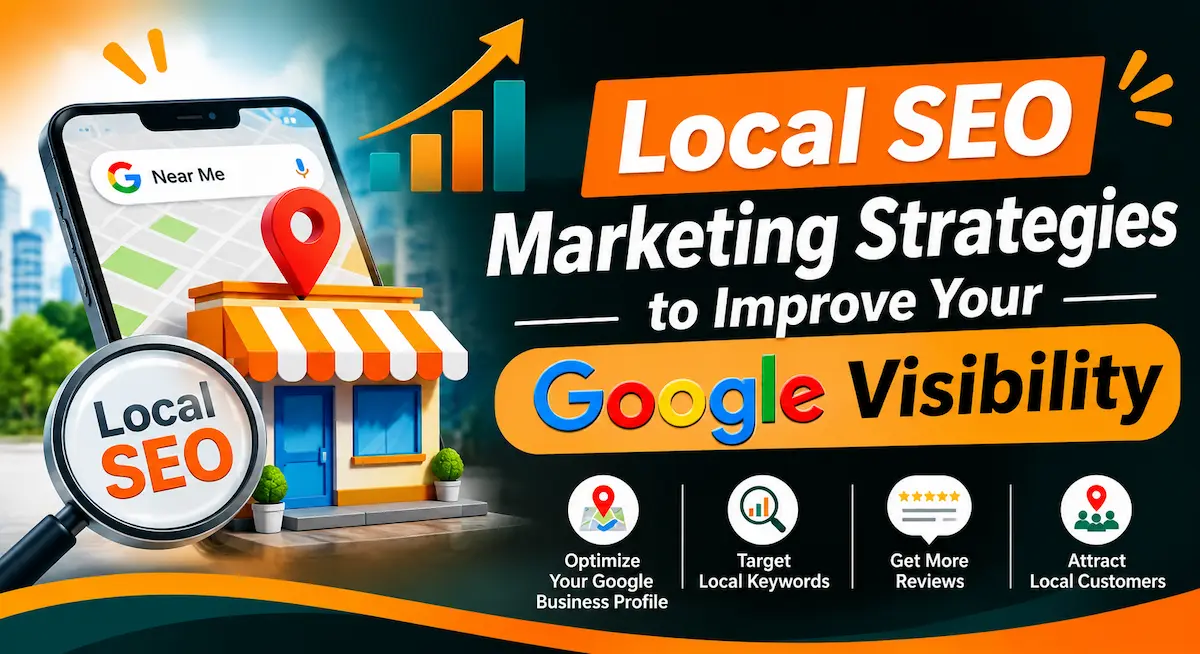
Effective local SEO marketing goes beyond adding location-based keywords. It includes optimizing your Google Business Profile, improving website content, and building a positive online reputation to attract nearby customers.
1. Optimize Your Google Business Profile
For eligible local businesses, Google Business Profile is an important starting point. It helps customers find details such as your address, phone number, opening hours, and services.
Complete your profile with the correct business name, primary category, contact information, and service details. Add genuine photographs of your premises, products, team, or completed work. Keep opening hours updated and write a description that clearly explains what your business offers.
2. Choose Keywords Based on Customer Searches
Keyword research should reflect the services you provide and the locations you genuinely serve. A dental clinic, for example, may target searches such as:
| Search query | Relevant page |
| Dentist in Rohini | Clinic location page |
| Root canal treatment in Rohini | Root canal service page |
| Teeth whitening cost | Teeth whitening page |
| Emergency dentist near me | Emergency dental service page |
Use Google Keyword Planner and Google Search Console to identify relevant searches. Questions customers regularly ask can also reveal useful content opportunities.
Avoid creating separate pages for every small variation of a keyword. Each page should address a distinct customer requirement.
3. Create Useful Service and Location Pages
Your website should explain what your business offers and where customers can access those services. A good service page covers the work involved, who needs it, how the process works, and how to get in touch.
Location pages can help businesses serving multiple areas, provided each page contains relevant information. For example, an agency serving Delhi, Noida, and Gurugram may create separate pages when it has meaningful service information or experience to discuss for each market.
Copying the same content and replacing city names does not provide much value. Create separate pages only when they serve a genuine purpose.
4. Maintain Accurate Business Listings
Your business details may appear on Google, directories, social platforms, and industry websites. Keep your business name, address, and phone number accurate wherever customers might find you.
For Indian businesses, platforms such as Justdial and IndiaMART may be relevant depending on the industry. Update outdated information after a change of address, phone number, or business name.
5. Collect Genuine Customer Reviews
Reviews help potential customers understand other people’s experiences with your business. They can also contribute to your online reputation.
Ask customers for honest feedback after completing a purchase or service. Share your Google review link through an appropriate follow-up message and respond professionally to feedback.
When a customer raises a genuine concern, acknowledge it and explain how you intend to address the issue. Avoid purchasing reviews or offering rewards in exchange for positive ratings.
6. Build Relevant Local Backlinks
Local backlinks are links to your website from other relevant websites. These may come from local publications, industry associations, community organisations, or business partners.
Look for genuine opportunities to earn mentions. A restaurant could receive coverage from a local food publication, while a professional service provider could contribute expert advice to an industry website. Focus on relevant links rather than purchasing backlinks from unrelated websites.
7. Publish Content That Answers Local Questions
Your content should address the questions customers actually ask before choosing a business. A property consultant could write about documents buyers should check before purchasing a flat. A clinic could explain its treatments and appointment process.
Focus on providing useful information that helps readers make decisions rather than publishing multiple articles with slightly different city names.
8. Improve Mobile Usability and Add Local Business Schema
Many people search for nearby businesses using their phones. Your website should load properly, display contact information clearly, and make enquiry forms easy to complete.
You can also add LocalBusiness structured data to provide search engines with details such as your business name, address, and opening hours. The information in the markup must match what visitors see on your website.
Use Google’s Rich Results Test to check supported structured data. Adding schema does not guarantee higher rankings or a rich search result.
Benefits of Local SEO for Businesses
Local SEO can help businesses reach people who are already looking for nearby products or services. Its main benefits include:
- Better local visibility: Helps your business appear in relevant Google Search and Maps results.
- Relevant website traffic: Attracts people searching for services in locations you actually serve.
- More customer enquiries: Makes it easier for potential customers to call, request directions, or visit your website.
- Greater customer trust: Accurate business details and genuine reviews help customers assess your business.
- Local market reach: Gives small businesses an opportunity to compete in their service areas.
Limitations of Local SEO
Although local SEO can improve visibility, it cannot guarantee rankings or sales. Businesses should consider these limitations before investing in a campaign.
- Strong competition: Established businesses may have better visibility and stronger online reputations.
- Location restrictions: Your distance from the searcher can affect which local results appear.
- Ongoing effort: Business information, website content, and customer reviews need regular attention.
- No guaranteed leads: Higher rankings and more website visits do not automatically translate into customers.
- Changing search results: Competition and Google’s search systems can affect visibility over time.
Local SEO for Single-Location and Multi-Location Businesses
The right local SEO setup depends on how your business serves customers. A shop with one address has different requirements from a company operating several branches or travelling to customers.
- Single-location businesses: Maintain one accurate Business Profile and create useful pages for your main services.
- Service-area businesses: Define the areas you genuinely cover. If customers do not visit your business address, follow Google’s guidelines for hiding that address.
- Multi-location businesses: Each eligible branch can have its own profile. Keep branch details accurate and create separate location pages when they provide useful information.
Do not use virtual offices or unrelated addresses to create additional business profiles. Every profile should meet Google’s eligibility requirements.
Local SEO vs Traditional SEO
Both approaches involve keyword research, useful content, website improvements, and link building. However, they differ in their target audiences and the searches they aim to attract.
| Comparison | Local SEO | Traditional SEO |
| Audience | Customers in a specific area | Wider or international audience |
| Search focus | Location-related searches | Broader search queries |
| Main platforms | Google Search and Maps | Search engines |
| Content | Local services and location pages | Broader topics and service pages |
| Business goal | Local calls, visits, and enquiries | Wider traffic, leads, and sales |
A business can use both approaches. For example, an agency may target customers in Delhi through local SEO while publishing informational content for readers across India.
How to Measure Local SEO Marketing Performance
Rankings alone cannot tell you whether your local SEO work is bringing customers. Track website activity and business enquiries to understand which pages and search channels are producing useful results.
- Google Business Profile: Check available data on calls, website clicks, direction requests, and profile interactions.
- Google Search Console: Review search queries, impressions, clicks, and individual page performance.
- Google Analytics 4: Track organic visits, enquiry form submissions, and other important website actions.
Keep a record of actual calls and enquiries as well, since not every customer interaction appears in website analytics. Review the numbers monthly and identify pages that receive visitors but generate few enquiries.
Common Local SEO Mistakes to Avoid
Some businesses create more pages and listings before fixing basic problems with their existing online presence. Avoid these common mistakes:
- Adding keywords to the Google Business Profile name when they are not part of the real business name.
- Creating location pages for areas the business does not serve.
- Publishing duplicate pages with only city names changed.
- Leaving outdated addresses and phone numbers online.
- Purchasing customer reviews or irrelevant backlinks.
- Measuring success only through keyword rankings.
Fixing these issues can make your existing local SEO work more useful to customers.
How Long Does Local SEO Marketing Take to Show Results?
Local SEO does not have a fixed timeline. Google explains that website changes can take anywhere from a few hours to several months to affect search results. It recommends waiting a few weeks before evaluating their impact.
Businesses working with an SEO agency such as Mind Mingles should review progress regularly rather than judge a campaign by rankings alone.
| Period | What to monitor |
| First few weeks | Business information, indexing, and technical issues |
| 1–3 months | Search impressions, clicks, and profile interactions |
| After 3 months | Enquiries, calls, and changes in local visibility |
Wrapping Up
Local search visibility depends on more than adding location keywords to a website. Your business information, service pages, reviews, and online reputation should give customers a clear picture of what you offer and where you operate.
Start with accurate business details, improve the pages that matter to customers, and track the enquiries your efforts generate. A practical local SEO marketing strategy should make it easier for nearby customers to find your business and get in touch.
Frequently Asked Questions
1. Is local SEO worth it for a small business?
Yes. It can help small businesses reach people searching for nearby services, comparing local providers, or looking for directions and contact details.
2. Can a business rank in multiple cities?
A business can appear in searches across different cities, but visibility varies by search location and competition. Businesses with genuine branches can create eligible profiles for those locations.
3. Does Google Business Profile improve local SEO?
A complete and accurate profile helps Google understand your business and gives customers useful information. Relevance, distance, and prominence are Google’s main local ranking factors.
4. How much does local SEO marketing cost in India?
The cost depends on competition, the number of locations, website condition, and the work involved. A single-location business may need a smaller campaign than a company managing several branches.
5. Can I do local SEO myself?
Yes. You can manage your Business Profile, update website information, respond to reviews, and monitor performance. Larger campaigns involving technical SEO and multiple locations may require professional support.
6. Should I hire an agency for local SEO?
An agency can help with website optimization, local listings, content, and performance tracking. Before hiring one, check its experience, reporting process, deliverables, and understanding of your industry.

Subash Kumar
Subash Kumar is a digital marketing strategist with over a decade of experience specializing in SEO, social media and data-driven content. He has helped brands achieve 150%+ growth in online visibility and increase engagement rates by up to 100% across technology, real state and ecommerce sectors. With a strong focus on analytics, Subash Kumar crafts campaigns that consistently drive results and deliver up to 5x ROI.