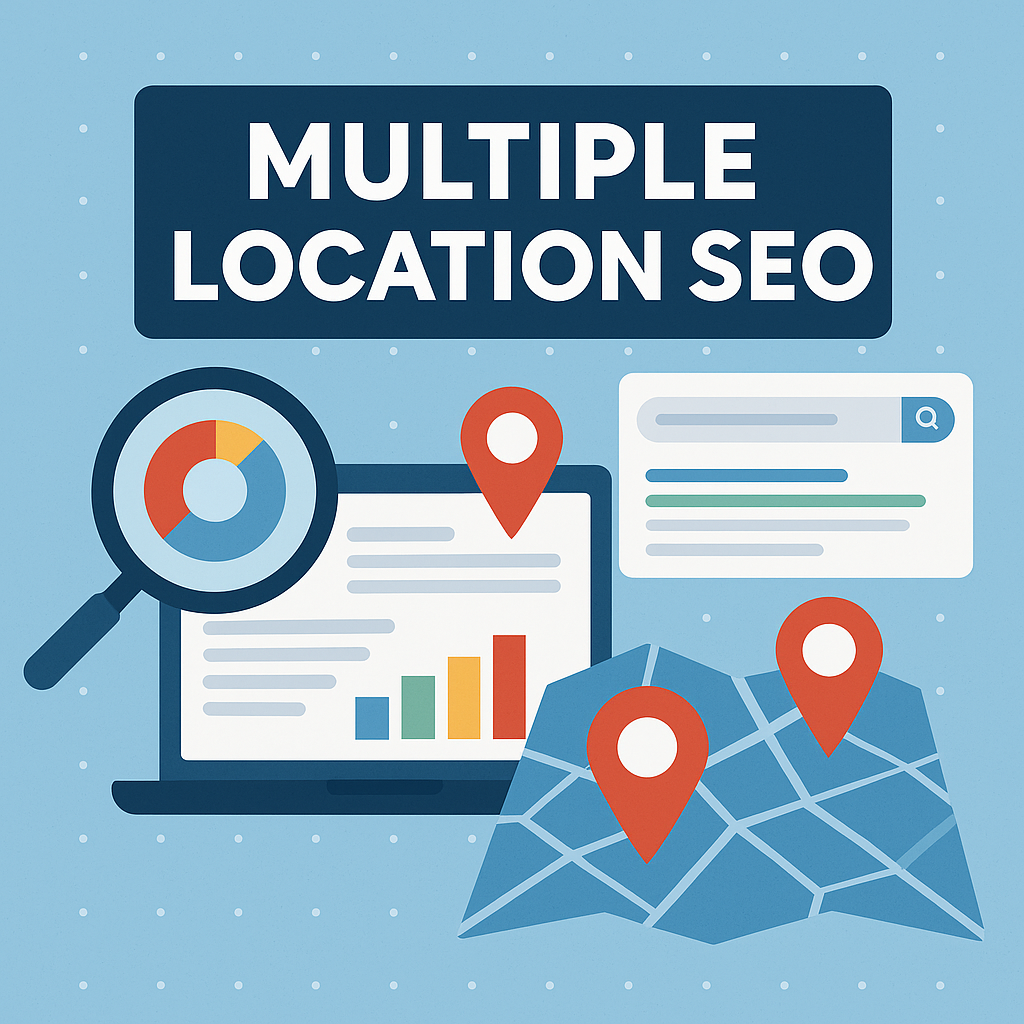
Multiple Location SEO (MLS) is the process of optimizing a business’s online presence to rank effectively in search results across various geographic locations. This strategy is crucial for businesses with multiple physical or service-area locations, such as franchises, retail chains, or service-based companies, to attract local customers and drive foot traffic or online conversions.
Why Multiple Location SEO Matters
Local search is a dominant force in consumer behavior. According to recent data, 46% of Google searches have local intent, and 50% of mobile local searches seek business information like addresses or phone numbers. For businesses with multiple locations, MLS ensures each branch or service area is visible to its target audience, enhancing:
Local Visibility: Appear in Google’s Map Pack, local search results, and “near me” queries.
Customer Engagement: Deliver relevant, location-specific content to improve user experience.
Foot Traffic and Conversions: Attract customers to physical stores or localized online services.
Competitive Edge: Outrank local competitors by tailoring strategies to each market.
However, Multiple location seo is complex due to the need to manage unique content, consistent business information, and localized optimization for each location. Below, we outline a step-by-step strategy to master MLS.
Step-by-Step Multiple Location SEO Strategy
1. Create Location-Specific Landing Pages
Each location should have a dedicated landing page on your website with a unique URL. These pages act as “microsites” for local SEO, providing search engines and users with relevant, location-specific information. Key elements to include:
NAP (Name, Address, Phone Number): Ensure consistency across all platforms. Include the full address, a local phone number, and the business name exactly as it appears on Google Business Profile (GBP).
Unique Content: Avoid duplicate content by crafting original text for each page. Discuss local services, staff bios, customer testimonials, or community involvement. For example, a pet grooming chain might create a blog post like “Top Dog-Friendly Events in San Francisco.”
Location-Specific Keywords: Incorporate geo-modified keywords (e.g., “HVAC services in Witney” or “florist in New York”). Use tools like SEMrush or Ahrefs to identify high-traffic local keywords.
Embedded Google Map: Include a map for the specific location to enhance user experience and signal local relevance to Google.
Structured Data Markup: Implement Schema.org markup (LocalBusiness schema) to provide search engines with detailed location information, such as address, hours, and reviews.
Visuals: Use high-quality, location-specific images (e.g., storefront, team, or local landmarks) with descriptive alt text to improve accessibility and SEO.
Calls-to-Action (CTAs): Encourage actions like booking appointments, calling, or leaving reviews. Embed review widgets or links to GBP.
Driving Directions: Provide detailed directions, mentioning local landmarks to boost entity recognition by Google.
Hours and Services: List location-specific hours, holiday schedules, and unique offerings (e.g., “free consultations in Denver”).
Internal Linking: Link to other relevant pages on your site to improve site architecture and distribute page authority.
Best Practice: Use a centralized website with subfolders (e.g., example.com/denver) rather than separate domains for each location. This leverages existing domain authority and simplifies management. Avoid “cut-and-paste” templates, as duplicate content can harm rankings by confusing search engines or diluting backlink value.
Example: Domino’s Pizza creates location pages with unique offers, store hours, and maps, ensuring each page is distinct and user-focused.
2. Optimize Google Business Profiles (GBP) for Each Location
Google Business Profile is a cornerstone of local SEO, influencing Map Pack rankings and visibility in Google Maps. For multi-location businesses, managing GBPs effectively is critical. Steps to optimize:
Claim and Verify Each Profile: Create or claim a GBP for every location. For businesses with 10+ locations, use bulk verification by uploading a spreadsheet to GBP.
Complete All Fields: Include accurate NAP, business category, hours, website URL, services, and products. The more details provided, the better Google can match your listing to relevant queries.
Use Location-Specific Keywords: Incorporate local keywords in the business description and service listings (e.g., “home decor in Derby”).
Post Regularly: Share updates, promotions, events, or local news with high-quality photos and videos. Regular posts signal an active business to Google.
Encourage Reviews: Positive reviews boost rankings and trust. Include CTAs on location pages or in email campaigns to prompt customers to leave reviews on Google or Yelp. Respond to all reviews, addressing negative ones professionally.
Add High-Quality Photos: Upload images of the storefront, interior, products, or team. Visuals enhance user engagement and listing appeal.
Q&A Section: Monitor and answer customer questions in the GBP Q&A section, as these can influence voice search results.
Avoid Violations: Do not use virtual offices for GBP listings unless staff are present during business hours, as this violates Google’s guidelines and risks suspension.
Agency Tip: Use GBP Insights to track performance metrics like search views, clicks, and calls for each location. Compare data across locations to identify underperforming profiles.
3. Ensure NAP Consistency Across Citations
Citations (mentions of your business’s NAP on directories, websites, or social platforms) are vital for local SEO. Inconsistent NAP data can confuse search engines and customers, harming rankings. Steps to manage citations:
Audit Existing Citations: Use tools like Moz Local, BrightLocal, or SEMrush to identify inconsistencies in NAP across directories like Yelp, Bing, Yellow Pages, or industry-specific platforms.
Correct Inconsistencies: Update NAP to match your GBP and website exactly, including punctuation and formatting (e.g., “St.” vs. “Street”).
Build New Citations: Submit business information to major directories (e.g., Localeze, Infogroup, Acxiom) and local platforms (e.g., Chamber of Commerce sites). Data aggregators can streamline this process.
Monitor Regularly: Track citations whenever business details change (e.g., new phone number or address). Update all listings promptly to maintain consistency.
Pro Tip: Prioritize quality over quantity. Focus on 50 high-authority citations rather than 250 low-quality ones, as excessive low-quality citations can dilute SEO efforts.
4. Develop a Localized Content Strategy
Content is the backbone of multiple location seo, showcasing expertise and relevance for each location. A robust content strategy includes:
Location-Specific Blog Posts: Write about local events, news, or community involvement (e.g., “Top 5 Summer Events in Chicago”). These posts boost engagement and relevance.
Long-Form Content: Create in-depth guides or case studies for each location to establish authority. For example, a law firm might publish “Guide to Personal Injury Claims in Long Beach.”
Short-Form Content: Produce FAQs, service descriptions, or customer stories tailored to local audiences.
User-Generated Content (UGC): Embed customer reviews, testimonials, or photos on location pages to add authenticity and avoid duplicate content issues.
Geo-Modified Keywords: Use tools like Surfer SEO or SEMrush to identify local keyword variations (e.g., “NYC” vs. “New York City”) and integrate them naturally into content.
Case Studies: Highlight successful local projects or customer outcomes to showcase expertise and build trust.
Social Media Integration: Share location-specific content on social platforms using local hashtags or geotargeting. Consider separate social accounts for each location, as done by The Gym Group.
Example: A pet grooming salon could publish “5 Tips for Winter Pet Care in Denver,” linking local weather challenges to their services.
Warning: Avoid keyword stuffing, as it makes content unreadable and risks penalties. Focus on natural, user-focused writing.
5. Build Local Backlinks
Backlinks from local, high-authority websites signal trustworthiness and relevance to search engines. Strategies to acquire local backlinks:
Sponsor Local Events: Support community events, charities, or sports teams to earn links from event websites, local news outlets, or colleges.
Host Meetups or Events: Organize local meetups using platforms like Meetup.com to generate buzz and links.
Collaborate with Local Influencers: Partner with local bloggers, vloggers, or social media influencers to create content about your business (e.g., a food blogger reviewing a restaurant).
Engage with Local Institutions: Secure links from universities, libraries, or chambers of commerce, which carry high domain authority.
Publish Shareable Content: Create valuable local resources (e.g., “Guide to Dog-Friendly Parks in Seattle”) to attract organic links.
Note: Backlinks should point to specific location pages, not just the homepage, to boost their individual PageRank.
6. Optimize for Mobile and Technical SEO
Mobile searches dominate local intent, with many users searching on-the-go. Technical SEO ensures your site is accessible and performs well. Key actions:
Mobile Optimization: Ensure location pages are mobile-friendly with fast load times and intuitive navigation. Poor mobile UX increases bounce rates, harming rankings.
Page Speed: Use tools like Google PageSpeed Insights to identify and fix slow-loading elements. Compress images and leverage browser caching.
Site Architecture: Use a centralized structure (e.g., subfolders) for easier crawling and indexing. Implement internal linking to distribute authority across location pages.
Schema Markup: Beyond LocalBusiness schema, use Organization and BreadcrumbList schema to enhance search result snippets.
Crawl Budget: Avoid duplicate content or thin pages, as they waste crawl budget and reduce indexing efficiency.
HTTPS and Security: Ensure your site uses HTTPS to build trust with users and search engines.
Tool Recommendation: Run regular audits with Ahrefs Webmaster Tools or Google Search Console to identify technical issues like broken links or crawl errors.
7. Leverage AI and Automation Tools
AI and automation can streamline MLS, especially for businesses with many locations. Use these tools strategically:
Content Creation: AI tools like Jasper or ChatGPT can generate drafts for location-specific content, but always edit for authenticity and local relevance. Combine AI with human oversight to avoid generic output.
Mass Page Builders: Tools like SERPs.com’s Mass Page Builder automate the creation of unique, SEO-optimized location pages with customizable images and local details.
Citation Management: Use BrightLocal or Moz Local to automate citation building and monitoring.
Keyword Research: SEMrush or Ahrefs can identify local keyword opportunities and track competitor strategies.
Performance Tracking: AgencyAnalytics or SEMrush provide multi-location SERP tracking dashboards to compare rankings across locations.
Caution: Over-reliance on AI-generated content without human editing can lead to low-quality, generic pages that fail to engage users or rank well.
8. Monitor and Analyze Performance
Regular tracking ensures your MLS strategy is effective and allows for adjustments. Key metrics to monitor:
Local Rankings: Track rankings for location-specific keywords using SEMrush, AgencyAnalytics, or GBP Insights.
Traffic and Engagement: Use Google Analytics to measure traffic, time on site, and bounce rates for each location page.
Conversions: Monitor calls, form submissions, or bookings from location pages to assess ROI.
Review Metrics: Track review volume and ratings across GBP and other platforms.
Citation Health: Regularly audit citations for consistency using Moz Local or BrightLocal.
Best Practice: Create a centralized dashboard to compare performance across locations and identify trends or underperforming areas.
Common Challenges and Solutions
MLS presents unique challenges, but proactive strategies can address them:
Challenge: Managing unique content for dozens or hundreds of locations.
Solution: Use a mix of AI-generated drafts, UGC, and human-edited content. Prioritize high-traffic locations for custom content and use templates with variations for smaller ones.
Challenge: Inconsistent NAP across citations.
Solution: Automate citation management with tools like Moz Local and conduct quarterly audits.
Challenge: Competing with local and national brands.
Solution: Focus on hyper-local content, niche keywords, and local backlinks to differentiate your pages.
Challenge: Duplicate content penalties.
Solution: Ensure each page has unique text, images, and CTAs. Use case studies, reviews, or staff bios to differentiate.
Challenge: Time-intensive GBP management.
Solution: Use bulk upload tools for GBP updates and delegate review responses to local managers.
Emerging Trends in Multiple Location SEO (2025)
Stay ahead by incorporating these trends:
Voice Search Optimization: Optimize for “near me” and conversational queries, as voice search grows. Use GBP Q&A and structured data to capture these queries.
AI-Driven Insights: Leverage AI to analyze customer search data and predict local trends. Tools like SEMrush use AI to refine keyword strategies.
Visual Search: Optimize images with descriptive alt text and structured data, as platforms like Google Lens gain traction.
Geo-Targeted Ads: Complement MLS with geo-targeted Google Ads or social media campaigns to boost local traffic while SEO matures.
Ecommerce Integration: Allow customers to check in-store availability or reserve items online, bridging online and offline experiences.
User Experience (UX): Prioritize engagement metrics like time on site, as they influence rankings. Use interactive content or localized videos to boost UX.
Tools for Multiple Location SEO
Keyword Research: SEMrush, Ahrefs, Google Keyword Planner
Content Optimization: Surfer SEO, Clearscope
Citation Management: Moz Local, BrightLocal, Yext
Rank Tracking: AgencyAnalytics, SEMrush, Localrank.so
Technical SEO: Google Search Console, Ahrefs Webmaster Tools
GBP Management: Google Business Profile bulk upload, BrightLocal
Content Creation: Jasper, ChatGPT (with human editing)
Mass Page Building: SERPs.com Mass Page Builder
Conclusion
Multiple Location SEO is a powerful strategy to enhance visibility, attract local customers, and drive conversions for businesses with multiple locations. By creating unique location pages, optimizing GBPs, ensuring NAP consistency, building local backlinks, and leveraging AI and analytics, businesses can dominate local search results. Stay proactive with regular audits, competitor analysis, and trend adoption to maintain a competitive edge in 2025 and beyond.