Running ads online is easy. The challenge is knowing whether or not those ads work. The magic occurs in the paid search analytics that translates raw clicks and impressions into customer behavior, campaign health, and real returns stories. It is not just a dashboard full of numbers, but rather knowing what ads are getting people to take action, where your money is being spent, and how to spend money in a smarter way next time. To any company investing in Google Ads, Bing, and similar services, analytics is the key to success, distinguishing expended funds and quantitative growth. When done well, it converts data into decisions that will make a difference.
What Is Paid Search Marketing?
Paid search marketing, commonly referred to as PPC (pay-per-click) advertising, is a form of digital marketing in which companies pay to ensure that their ads are placed at the top of search engine results. You don’t wait to be ranked organically, and instead, you buy to be seen when people search using particular keywords associated with the product or service you are offering. To illustrate, when a person searches for the best running shoes, a sports brand can instantly be present in search returns immediately through a paid advertisement. You can only pay once someone clicks on your advertisement, and thus it is an economical means of reaching people who are already interested in what you have to offer.
Why is PPC so Important?
Here is how paid search analytics is important for you:
Immediate Visibility and Reach
Instant visibility is one of the largest benefits of PPC (pay-per-click) advertising. PPC also places your brand at the top of the search engine results pages, as opposed to organic search, which may take months to reach the top. Your ad will appear immediately when a potential customer types in search of a product or service that you offer. New businesses that are building awareness or new product introductions find this instant exposure particularly useful.
Targeted Audience Engagement
PPC enables you to target the right people at the right time. With the help of keyword targeting, place of location, device preference, and time of the day, you can make sure that your advertisements will reach users who actively seek what you are offering. This accuracy minimizes expenditure wastage and increases the chances of conversions.
Measurable Results and ROI
All of the clicks, impressions, and conversions can be monitored in real-time. This implies that you can quantify precisely the contribution of each ad or campaign toward the sales, leads, or any other business objectives. In contrast to conventional advertising, PPC offers you straightforward, practical information on what works and what does not work, which can help you to optimize campaigns to achieve maximum benefits.
Cost Control and Flexibility
You have full budget control when using PPC. You establish daily or monthly limits, change bids, pause campaigns, or reallocate funds as necessary. This will guarantee you can test strategies and scale up what is working without excessively spending.
Competitive Advantage
Lastly, PPC provides businesses, regardless of size, with an opportunity to share the stage with industry players. If your brand is new, a properly optimized PPC campaign may get you in front of prospective customers before your rivals.
Key Metrics to Track in Paid Search Analytics
In relation to paid search, it is essential to monitor the appropriate metrics to know whether your campaigns are really bearing fruit. The issue with tracking the wrong numbers is that it can be a waste of time and money, whereas tracking the right ones can change clicks into business results. These are the most important paid search analytics metrics that every marketer should observe.
Click-Through Rate (CTR)
CTR estimates the number of individuals who have clicked on your advertisement. The higher the CTR, the more your ad is relevant and engaging to your audience. A low CTR can mean that your headline, description, or targeting should be improved.
Cost per Click (CPC)
CPC informs you of what you are paying per click. Tracking CPC enables you to control your budget and optimize the bids. One of the main pitfalls in this area is overpaying on clicks that do not convert, which is why this aspect of the balancing between cost and quality traffic is important.
Conversion Rate
Clicks are good, but conversions are what make your business. Conversion rate can be measured in the number of clicks leading to the desired actions, whether it is a sale or submission of the form or signing up for the newsletter. Monitoring this indicator will make sure that your campaigns are producing a real ROI.
Return on Ad Spend (ROAS)
ROAS is a ratio of money earned to the sum of money spent on advertisements. It is the final measure to see how profitable your campaign would be. It is also important to analyze ROAS regularly and see which campaigns work and which ones do not.
Quality Score
Quality Score is a Google Ads metric that evaluates how relevant your keywords, ad copy, and landing page experience are. An increased score can reduce CPC and enhance ad positioning. This metric will help to concentrate on efficient and cost-effective campaigns.
Impression Share
This will indicate the frequency of your ads in relation to your competitors. Low impression share can be caused by a low reach due to budget constraints or competitive bids.
Tools & Platforms for Paid Search Analytics
Conducting a paid search campaign is one thing, but it takes proper tools to comprehend its performance. Through precise analytics, companies are able to monitor clicks, conversions, and ROI as well as areas of improvement. A number of tools and platforms simplify this process by offering insights that lead to smarter decisions.
Google Ads
Most paid search programs are based on Google Ads. It possesses built-in analytics that provide details on impressions, clicks, CTR, CPC, and conversion tracking. The Auction Insights, Keyword diagnostics, and audience segmentation features allow advertisers to understand their performance and that of their competitors. Google Ads also offers automated bidding tactics, which dynamically change based on performance measurements to assist in streamlining campaigns.
Google Analytics (GA4)
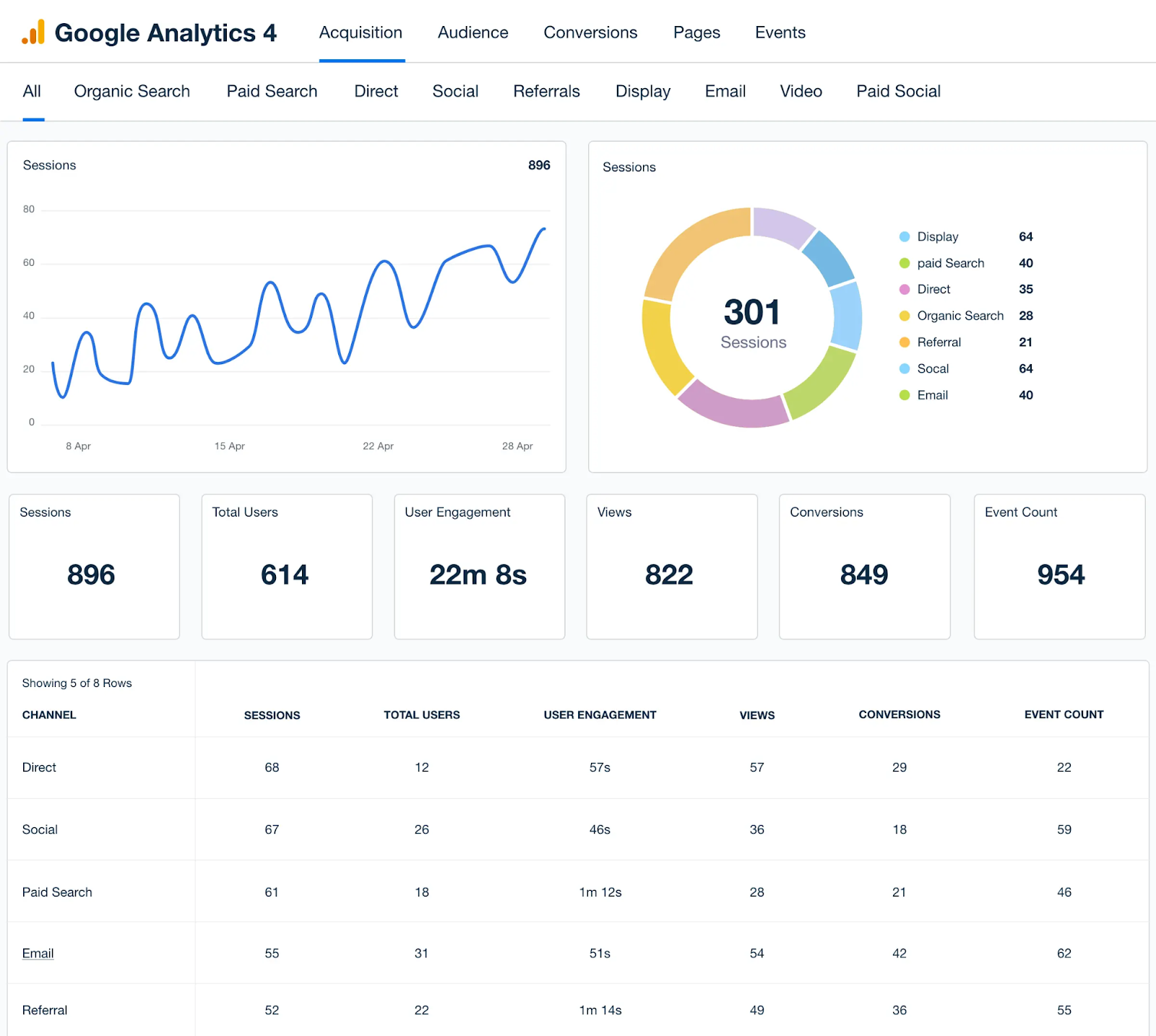
Google Ads also uses ad-specific metrics, but Google Analytics gives a more comprehensive picture of the behavior of users who have clicked on an ad. GA4 allows marketers to see the interactions of visitors with a landing page, the campaigns bringing the highest number of conversions, and how customers navigate the site. Paid search campaigns on top of GA4 mean you do not count clicks, you count real engagement and ROI.
MonsterInsights
MonsterInsights is the place to be when you are a WordPress user, and you have a headache when you are seeking clear data. It seamlessly works with Google Analytics, and it interprets all those complicated numbers into simple and practical insights. You can follow the behavior of paid traffic once it arrives on your site, who is converting, where they are dropping off, and which ad campaigns are actually working. Essentially, it makes you make the links between clicks on ads and actual conversions.
Semrush
Consider Semrush the Swiss Army knife of paid search analytics. It not only gives you your own performance rate in regards to advertisements, but also allows you to spy on the competition. You are able to view what keywords they are bidding on, their ad copy, and how their campaigns are doing in the long run. The information assists you in refining your personal strategy, outbidding intelligently, and winning more lucrative clicks. It is chess with the full view of the moves of your opponent.
SpyFu
SpyFu is just as the name suggests, it is all about finding out the paid search secrets of your competitors. Want to know what keywords they are making money on? What advertisements have they been using for all these months (they work)? SpyFu gives you that intel. You can discover the weaknesses of your own campaigns, focus on high-ROI keywords, and optimize your ad copy using the results of what previously worked. The goal? Less guessing, more growing.
Dashboards and Reporting Systems
Reporting tools may help companies with multiple campaigns across multiple channels to consolidate measurements into more readable dashboards. Real-time reporting and visualizations make it easy to share insights with stakeholders, monitor trends, and act in real-time.
Conclusion
Paid search analytics is not a luxury anymore; it is the cornerstone of any effective digital marketing strategy. Awareness of the correct metrics, appropriate tool application, and keeping pace with trends, automation, cross-platform campaigns, and mobile optimization will enable businesses to turn clicks into meaningful results. Performance monitoring, streamlining campaigns, and addressing the changing behavior of the user make every dollar in advertising worth something. By 2025, the data-driven insights and intelligent approach will not be associated with the brands that waste money with no outcomes, and the ones that can ensure the growth and long-term impact.
Frequently Asked Questions (FAQS)
Q1. What is the difference between paid search and display advertising?
Paid search refers to ads that are placed in the results of searches, and display ads appear on websites or apps targeted at a specified audience. Paid search gathers intent; display raises awareness.
Q2. How often should I review my paid search analytics?
Ideally, it should be daily active campaigns and weekly in-depth performance evaluations. Monthly reviews are useful in determining the trends and making strategic adjustments.
Q3. Can small businesses benefit from paid search analytics?
Absolutely. With the appropriate metrics, target, and bid strategies, even a small budget can be optimized to ensure it maximizes ROI.
Q4. How do seasonality and trends affect paid search performance?
Clicks, CTR, and conversions can vary dramatically depending on seasonal demand. Analytics monitoring assists in fine-tuning bids and advertisement creatives.
Q5. What role does landing page quality play in paid search campaigns?
Quality Score, conversion rates, and ad performance directly depend on landing page experience. Fast-loading and optimized pages enhance ROI.