Introduction to TikTok Emoji Codes
Emojis are like a universal language online — we use them to show feelings, reactions, and even a bit of personality in our chats and posts. On TikTok, a platform known for its vibrant and creative community, emojis play a significant role in enhancing content.
Beyond the standard emojis available on your device’s keyboard, TikTok offers a unique set of “secret” emoji codes that unlock platform-specific emoticons.
Using these secret Tiktok emoji codes, you can add extra flair, humor, and uniqueness to your videos, comments, or even your bio, making them a powerful tool for engagement and self-expression.
Why Does TikTok Use Emoji Codes?
TikTok uses emoji codes to give its community a fun and unique way to communicate. Instead of just relying on the usual emojis that look different on iPhones, Androids, or other devices, TikTok’s emoji codes keep a consistent visual across all platforms. This way, everyone sees them exactly as intended.
They’re also part of TikTok’s playful culture—helping users be more creative, join trends, and even share inside jokes that only TikTokers truly get. Plus, TikTok can create its own exclusive emojis tied to viral challenges, trends, and community vibes, making the platform feel even more special and connected.
How TikTok Emoji Codes Work
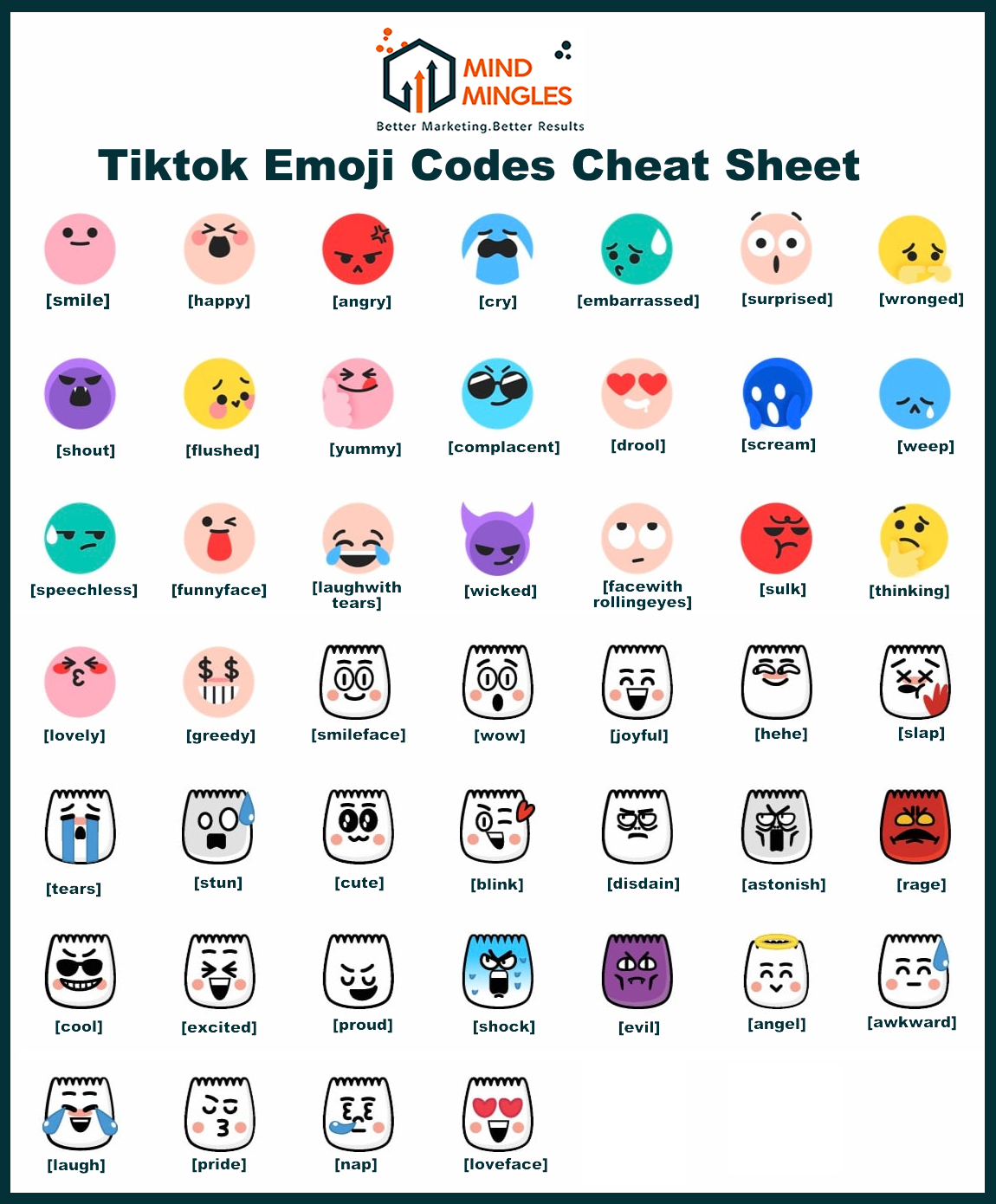
TikTok emoji codes are like secret shortcuts you can use to unlock special emojis on the app. Instead of choosing them from your normal emoji keyboard, you type a code inside square brackets—for example, [smile] or [proud].
Once you hit post, TikTok automatically turns that code into a fun, custom emoji that you won’t find anywhere else. For instance, typing [loveface] in a comment will show a heart-eyed face similar to , but with TikTok’s own unique style.
A couple of things to remember:
- These codes are case-sensitive, so you need to type them exactly right.
- Don’t forget the square brackets—they’re what make the magic happen.
- They work on both iOS and Android versions of TikTok.
It’s basically TikTok’s way of giving you access to a hidden set of emojis that make your comments and captions stand out.
Difference Between Standard Emojis and TikTok Emojis
Both standard emojis and TikTok emojis help us express feelings and add fun to conversations-but they aren’t the same. Here’s how they differ:
Standard Emojis vs TikTok Emojis
| Aspect | Standard Emojis | TikTok Emojis |
| How they’re made | Picked from your phone’s emoji keyboard | Typed using special text codes in square brackets (e.g., [smile]) |
| Where they work | Available on almost all apps and devices (WhatsApp, Instagram, etc.) | Work only inside the TikTok app; show as text elsewhere |
| Design & Style | Follow Unicode standards; look slightly different on Apple, Android, or Windows | Fun, cartoon-like, and consistent across TikTok |
| Ease of use | Instantly available on your keyboard | A “secret feature” — you need to know the codes to use them |
Read More-
4 Best Digital Tools to Grow Your TikTok Shop Sales
TikTok Hashtags Strategies That Actually Work to Grow Faster
How Much Does TikTok Pay Per View? Find Out Here!
Complete List of TikTok Secret Emoji Codes and Detailed Meanings
Did you know TikTok has its own set of 46 hidden emojis? 🎉 Unlike the ones you see on your phone’s keyboard, these secret emojis can only be used on TikTok. To unlock them, you just type a special shortcode inside square brackets (like this: [smile]) in the comments section of the app.
These emojis don’t show up in captions, bios, or usernames—just in comments. They work on both iOS and Android, and they’re a fun, creative way to show emotions, reactions, or just add a playful twist to your conversations.
Below, you’ll find the full list of TikTok’s secret emoji codes along with what each one means.
Happy and Positive Emojis
 1. [smile]
 1. [smile]
The [smile] emoji shows a pink face with a gentle smile and soft eyes, expressing happiness and friendliness. It’s perfect for wholesome content, like cute pet videos or kind interactions— For example, you might comment, “This is so sweet [smile]!”
 2. [happy]
 2. [happy]
The [happy] emoji shows a peach face with squinting eyes and a big grin, expressing excitement and joy. perfect for moments of high enthusiasm, such as reacting to an energetic dance video or a hilarious skit. —e.g., “This dance is fire [happy]!”
 3. [joyful]
 3. [joyful]
The [joyful] emoji shows a face radiating happiness with sparkling eyes, conveying pure joy or celebration. It’s ideal for uplifting or celebratory videos. You could comment, “So happy for you [joyful]!” for positive moments.
4. [smileface]
 4. [smileface]
The [smileface] emoji features a face with a warm, friendly smile, similar to [smile] but with a slightly different tone. It conveys positivity and friendliness. For instance, “Love this vibe [smileface]!” fits general positive reactions.
5. [complacent]
 5. [complacent]
The [complacent] emoji features a blue face wearing sunglasses and a small, smug smile, representing a chill or self-satisfied attitude. It’s great for confident reactions, like to a stylish outfit. You could comment, “You nailed it [complacent]” to show approval.
6. [proud]
 6. [proud]
The [proud] emoji shows a face with raised brows and a confident smile, conveying pride or accomplishment. It’s great for achievements or inspiring content. You might comment, “You killed it [proud]!” for successful moments.
7. [pride]
 7. [pride]
The [pride] emoji shows a face with raised brows and a proud, confident expression, representing success or self-assurance. It’s ideal for accomplishments or bold moments. For instance, “Own it [pride]!” fits confident posts.
8. [cool]
 8. [cool]
The [cool] emoji shows a face with sunglasses and a confident smirk, representing swagger or approval. It’s ideal for stylish or impressive content. You could comment, “Looking fresh [cool]!” to show admiration.
Sad and Emotional Emojis
9. [cry]
 9. [cry]
The [cry] emoji shows a blue face with teary eyes, expressing sadness, heartbreak , or emotional overwhelm. It’s used for emotional or sad content—e.g., “This broke my heart [cry].”
10. [weep]
 10. [weep]
The [weep] emoji shows a light blue face with sad eyes and a single tear, representing deep sadness or sympathy. It’s used for tragic stories or emotional tributes. For example, “This is so sad [weep]” fits heartfelt or somber content.
11. [tears]
 11. [tears]
The [tears] emoji depicts a face with an emotional meltdown and heavy tears, representing intense sadness or joy. It’s ideal for deeply emotional content. For example, “This is too much [tears]” fits overwhelming posts.
12. [wronged]
 12. [wronged]
The [wronged] emoji shows a yellow face with sad eyes and twiddling fingers, expressing shyness or feeling mistreated. It’s useful when reacting to content where someone feels misunderstood. e.g., “I didn’t mean it like that [wronged].”
Shocked and Surprised Emojis
13. [surprised]
 13. [surprised]
The [surprised] emoji shows a peach face with wide, circular eyes and an open mouth, expressing shock or amazement. It’s perfect for unexpected moments, like surprising plot twists or impressive stunts. eg- “How did they do that [surprised]?!”
14. [wow]
 14. [wow]
The [wow] emoji features a face with wide eyes and an open mouth, expressing amazement or being impressed. It’s great for incredible performances or visuals. For instance, “That’s insane [wow]!” fits mind-blowing content.
15. [astonish]
 15. [astonish]
The [astonish] emoji shows a face with a jaw-dropping, astonished look, representing being mind-blown. It’s perfect for incredible feats or reveals. You might comment, “No way [astonish]!” for unbelievable moments.
16. [shock]
 16. [shock]
The [shock] emoji shows a face with wide eyes and a dropped jaw, representing pure shock or disbelief. It’s perfect for surprising reveals or plot twists. For instance, “No way that happened [shock]!” fits unbelievable moments.
17. [stun]
 17. [stun]
The [stun] emoji shows a face with a stunned, wide-eyed expression, conveying shock or speechlessness. It’s perfect for unbelievable moments. You could comment, “I’m shook [stun]!” for surprising content.
Angry and Frustrated Emojis
18. [angry]
 18. [angry]
The [angry] emoji shows a red face with furrowed brows and clenched teeth or an X-shaped mouth, expressing frustration or playful outrage. It’s ideal for annoying or controversial content, like a prank gone wrong —e.g., “Why would you do that [angry]?”
19. [sulk]
 19. [sulk]
The [sulk] emoji shows a red face with a scrunched brow and a deep frown, conveying anger or displeasure. It’s useful when reacting to unfair or upsetting content. A comment like, “Not fair [sulk]” fits dramatic or petty moments.
20. [rage]
 20. [rage]
The [rage] emoji depicts a fiery, furious face, often red, conveying intense anger or outrage. It’s great for frustrating content. For instance, “This makes me so mad [rage]!” fits heated reactions.
21. [shout]
 21. [shout]
The [shout] emoji is a purple face with an open mouth, sharp fangs, and intense eyes, representing frustration or dramatic flair. It’s great for bold or chaotic content, like a heated argument. You might comment, “Stop it already [shout]!” to add intensity to your reaction.
Playful and Cheeky Emojis
22. [funnyface]
 22. [funnyface]
The [funnyface] emoji features a pink face winking with its tongue sticking out, expressing silliness or playfulness. It’s perfect for funny skits or goofy content. You could comment, “You’re too much [funnyface]!” to join in on the humor.
23. [wicked]
 23. [wicked]
The [wicked] emoji depicts a purple face with a mischievous grin and small devil horns, conveying naughtiness or playful mischief. It’s great for cheeky or rebellious content. You might comment, “You’re trouble [wicked]!” for a playful reaction.
24. [hehe]
 24. [hehe]
The [hehe] emoji depicts a face with a cheeky, playful giggle and squinted eyes, representing lighthearted teasing or amusement. It’s perfect for funny or flirty comments. For example, “You’re sneaky [hehe]” adds a playful tone.
25. [evil]
 25. [evil]
The [evil] emoji depicts a face with a sinister or mischievous grin, conveying dark humor or villainous vibes. It’s great for edgy or rebellious content. You could comment, “Plotting something [evil]?” for a dramatic reaction.
Romantic and Adoring Emojis
26. [flushed]
 26. [flushed]
The [flushed] emoji depicts a yellow face with blushing cheeks, cute eyes, and a shy smile, conveying nervousness or flirty feelings. It’s perfect for romantic or crush-related content, such as a cute creator’s video. An example comment is, “They’re so cute [flushed]!”
27. [lovely]
 27. [lovely]
The [lovely] emoji depicts a pink face blowing a kiss with a small heart, representing love or appreciation. It’s ideal for romantic or heartwarming content. For example, “You’re amazing [lovely]!” shows affection or support.
28. [loveface]
 28. [loveface]
The [loveface] emoji shows a face with a romantic or adoring expression, often with hearts, conveying affection or adoration. It’s perfect for romantic or cute content. For example, “In love with this [loveface]!” fits heartfelt posts.
29. [cute]
 29. [cute]
The [cute] emoji features a face with a sweet, adorable expression and big eyes, conveying charm or heartwarming feelings. It’s great for adorable animals or kids. For instance, “Too cute [cute]!” works for heart-melting posts.
30. [drool]
 30. [drool]
The [drool] emoji is a pink face with heart eyes and drool dripping from its mouth, conveying admiration or intense desire. It’s perfect for attractive people, cute animals, or desirable objects. An example is, “Obsessed with this look [drool]” for a stunning outfit or cute pet.
Other Emotions and Reactions
31. [embarrassed]
 31. [embarrassed]
The [embarrassed] emoji is a teal face with a concerned look and a sweat drop, showing awkwardness or mild embarrassment. It’s great for cringe moments—e.g., “I can’t believe I did that [embarrassed].”
32. [speechless]
 32. [speechless]
 The [speechless] emoji is a teal face looking sideways with a sweat drop on its temple and a closed mouth, conveying annoyance or being at a loss for words. It’s great for frustrating or absurd content. A comment like, “I have no words [speechless]”
33. [thinking]
 33. [thinking]
The [thinking] emoji features a yellow face with a hand on its chin, looking pensive, conveying contemplation or confusion. It’s great for puzzling or questionable content. You could comment, “What’s going on here [thinking]?” to question a post’s logic.
34. [disdain]
 34. [disdain]
The [disdain] emoji depicts a face with a bored or disapproving expression, looking sideways, conveying a “seriously?” vibe. It’s great for unimpressive or cringey content. For example, “Not impressed [disdain]” fits dismissive reactions.
35. [blink]
 35. [blink]
The [blink] emoji shows a face with a blank, blinking expression, representing confusion or subtle disbelief. It’s ideal for puzzling or odd content. You could comment, “What just happened [blink]?” for a deadpan reaction.
36. [scream]
 36. [scream]
The [scream] emoji depicts a blue face with wide eyes, holding its cheeks in fear, resembling The Scream painting. It conveys horror or intense surprise, making it ideal for scary videos or jump-scare pranks. You might comment, “That freaked me out [scream]!”
37. [laugh]
 37. [laugh]
The [laugh] emoji depicts a face laughing heartily with closed eyes, conveying amusement or hilarity. It’s great for funny videos or jokes. You might comment, “This is too good [laugh]!” for humorous content.
38. [laughwithtears]
 38. [laughwithtears]
The [laughwithtears] emoji shows a pink face laughing with tears streaming from its eyes, representing something hilariously funny. It’s ideal for comedy videos or memes. For example, “I can’t stop laughing [laughwithtears]!” fits perfectly for a funny post.
39. [slap]
 39. [slap]
The [slap] emoji shows a face with a dramatic or playful slap gesture, conveying a comedic reaction. It’s great for shocking or bold content. You might comment, “Did you just say that [slap]?” for a dramatic effect.
40. [awkward]
 40. [awkward]
The [awkward] emoji depicts a face showing discomfort or social clumsiness, often with a grimace, conveying a “yikes” or cringe moment. It’s great for awkward or embarrassing videos. You might comment, “That was painful [awkward]” for cringe-worthy content.
41. [nap]
 41. [nap]
The [nap] emoji depicts a face looking sleepy with closed eyes and a relaxed expression, conveying tiredness or a desire to rest. It’s great for late-night scrolling or boring content. You could comment, “I’m out [nap]” for relatable exhaustion.
42. [greedy]
 42. [greedy]
The [greedy] emoji shows a face with dollar signs in its eyes, conveying a desire for money or material things. It’s perfect for videos about luxury or wealth. You might comment, “I need that bag [greedy]!” for aspirational content.
43. [angel]
 43. [angel]
The [angel] emoji shows a face with a halo, representing innocence or goodness. It’s perfect for wholesome or angelic content. For example, “You’re an angel [angel]!” works for kind or supportive posts.
44. [excited]
 44. [excited]
The [excited] emoji depicts a face bursting with enthusiasm and sparkling eyes, conveying thrill or hype. It’s perfect for exciting announcements or performances. For example, “Can’t wait [excited]!” works for hyped-up posts.
45. [yummy]
 45. [yummy]
The [yummy] emoji shows a pink face with its tongue out, squinting eyes, and a thumbs-up, expressing love for food or something appealing. It’s ideal for food videos or aesthetically pleasing content. For instance, “That looks delicious [yummy]!”
46. [facewithrollingeyes]
 46. [facewithrollingeyes]
The [facewithrollingeyes] emoji is a pink face rolling its eyes upward with a neutral mouth, expressing annoyance or disbelief. It’s perfect for unimpressive or irritating content. For instance, “Really? [facewithrollingeyes]” works for sarcastic comments.
Read More-
How Much Does TikTok Pay Per View? Find Out Here!
Benefits of Using TikTok Emoji Codes
TikTok emoji codes aren’t just for fun—they can actually take your content to the next level. Here’s how:
◉ Boost Engagement ✨
Emojis make your posts pop! They grab attention, spark reactions, and encourage more likes, comments, and shares—helping your content land on the For You Page.
◉ Stand Out Creatively 🎨
These hidden emojis are unique to TikTok, so using them gives your content a special, platform-specific vibe that sets you apart from the crowd.
◉ Stay on Trend 📈
Many TikTok emojis are tied to viral challenges, memes, or inside jokes. By using them, you’re showing you’re in tune with the community and what’s trending right now.
◉ Show Off Your Brand Personality 🌟
Whether you’re a creator or a business, TikTok emojis make your content feel more fun and relatable, helping you connect with followers on a deeper level.
Where to Use TikTok Emoji Codes
TikTok emoji codes are a fun way to add personality to your interactions—but there are a few things you should know about where they actually work. After TikTok’s recent updates, these codes mainly show up correctly in comments, while standard emojis are still your best bet for captions, bios, and hashtags.
1. In Captions
Once upon a time, TikTok emoji codes worked in captions, but now they don’t display properly there. Don’t worry—you can still bring your captions to life with regular emojis. For example:
✨ “Feeling on top of the world! 🌍 #GoodVibesOnly”
Using emojis like this makes your captions more fun and helps them blend with trending styles.
2. In Comments
This is where TikTok emoji codes really shine! Adding codes like [happy] or [cry] makes your comments more expressive and helps you stand out in the crowd.
Think of them as your secret tool for reacting in a way that grabs attention and connects with other users.
3. In Bios
TikTok emoji codes don’t work in bios (at least not right now). But that doesn’t mean you can’t make your profile pop! Use standard emojis to show off your niche or personality—like 🎵 if you’re into music, 💪 if you’re all about fitness, or ✈️ if you’re a travel creator.
4. In Hashtags & Trends
Emoji codes won’t work in hashtags either. But again, regular emojis save the day. Pairing them with hashtags can boost your visibility and tie your content into viral challenges.
For example:
💃 #DanceChallenge
🔥 #GlowUp
Read More-
TikTok Hashtags Strategies That Actually Work to Grow Faster
Tips for Creative Emoji Use in TikTok Captions and Comments
◆ Match the Mood: Use [happy] for joyful content or [scream] for shocking videos to align with the video’s tone.
◆ Combine with Standard Emojis: Pair TikTok emojis with standard ones (e.g., [smile]😍) for a layered effect.
◆ Use Sparingly: Avoid overusing emojis, as this can make comments look spammy and reduce impact.
◆ Leverage Trends: Incorporate trending emojis like [chair] for humor or [loveface] for romantic challenges.
◆ Add Context: Use emojis to enhance storytelling, e.g., [wronged] to playfully admit a mistake in a comment.
◆ Experiment with Combinations: Try combining codes like [happy][sparkle] to create a celebratory vibe.
Common Mistakes to Avoid
Incorrect Formatting: Omitting square brackets or misspelling codes (e.g., [Smile] instead of [smile]) prevents the emoji from rendering.
☒ Overuse: Flooding comments with too many emojis can appear spammy and reduce engagement.
☒ Ignoring Context: Using irrelevant emojis (e.g., [rage] on a happy video) can confuse viewers and seem out of place.
☒ Using in Unsupported Areas: As of 2025, emoji codes don’t work in captions or bios, so stick to comments.
☒ Not Staying Updated: TikTok’s emoji trends evolve, so check for new codes to stay relevant.
Future of Emojis on TikTok
As TikTok continues to grow, its emoji ecosystem is likely to evolve. We may see:
- New Emoji Codes: TikTok could introduce additional codes to reflect emerging trends or cultural shifts.
- Expanded Functionality: Future updates might allow emoji codes in captions or bios, increasing their versatility.
- Integration with Trends: Emojis will likely play a bigger role in viral challenges, with creators using them to spark new trends.
- AI-Driven Customization: TikTok might leverage AI to suggest emoji codes based on video content or user preferences.
- Cross-Platform Compatibility: While currently exclusive, TikTok emojis could inspire similar features on other platforms, though their unique designs will likely remain TikTok-specific.
Conclusion
TikTok emoji codes are a fun and creative way to level up your presence on the platform. By using these hidden emojis, you can make your comments stand out, match TikTok’s energetic culture, and boost engagement effortlessly. From simple smileys like [happy] to quirky icons like [chair], these codes add personality and flair to every interaction.
Follow the tips in this guide, avoid common mistakes, and use trusted resources to fully master TikTok’s secret emoji language. As the platform continues to evolve, stay ahead by experimenting with new codes and embracing fresh trends.
Happy TikToking! 🎉