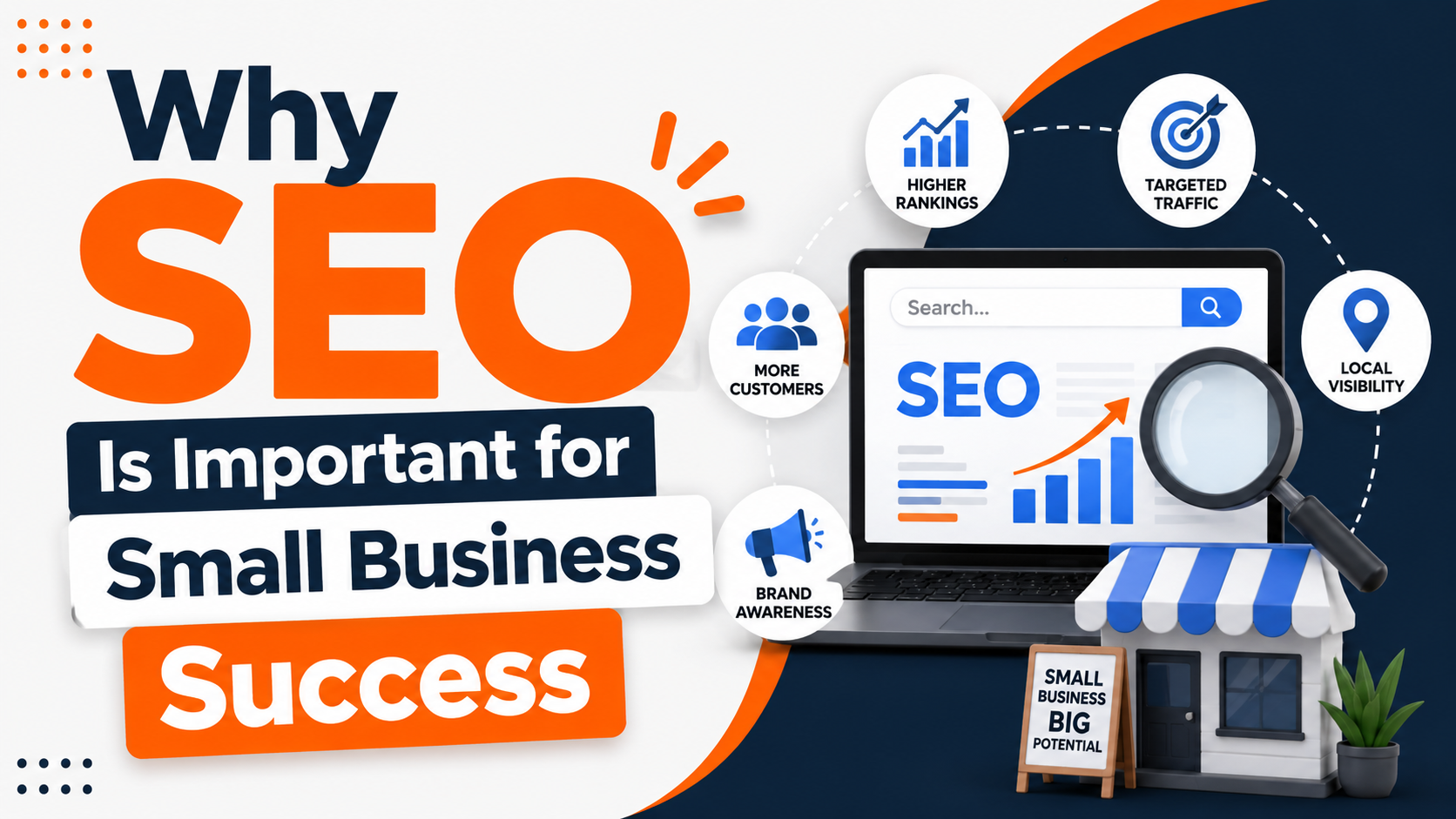
Search Engine Optimization (SEO) in 2025 is all about helping people discover your website through search engines like Google and Bing. With search engines constantly evolving, staying updated with the latest trends, algorithms, and best practices is critical for driving organic traffic.
One of the most common and important questions we answer is: “What’s the first step in the search engine optimization process for your website?”
✅ The first step is setting clear SEO goals based on your business needs—because knowing what you’re trying to achieve will guide every step that follows.
Why SEO Matters?
Search Engine Optimization (SEO) is still one of the most important tools for growing your website and attracting the right audience. In fact, a recent 2025 report from BrightEdge found that organic search drives around 53% of all website traffic—more than any other source. This means that showing up in search results is essential if you want people to find your business online.
But SEO has changed.
Here’s what’s new and why it matters:
- Google’s latest updates focus heavily on AI-powered search experiences, such as the Search Generative Experience (SGE), which gives users quick answers right in the search results. To rank well, your content must be helpful, clear, and trustworthy.
- Google now prioritizes user experience signals like page speed, visual stability, and how quickly users can interact with your page. These are measured by something called Core Web Vitals.
- As of 2025, mobile searches account for over 60% of all search traffic worldwide (Statista). This makes mobile-first design and fast-loading pages more important than ever.
- With the rise of voice search and AI assistants, people are searching differently—using full questions and natural language. Your website needs to match how real people talk and search.
In short, SEO in 2025 is about being helpful, fast, and easy to understand—on any device.
How To Do SEO For Website Step By Step – The Process
In 2025, successful SEO is about more than just keywords—it’s about creating helpful, user-first content, ensuring your site loads fast on all devices, and aligning with Google’s latest AI-driven updates. From setting clear goals and researching keywords to optimizing page experience, building quality backlinks, and tracking results, this how to do SEO for website step by step approach helps you improve visibility, drive organic traffic, and build long-term trust with your audience.
Step 1: Conduct Comprehensive Keyword Research
What’s the first step in the search engine optimization process for your website? The first and most critical step is keyword research. Keywords are the foundation of SEO, as they align your content with what your target audience is searching for. In 2025, keyword research goes beyond simple terms and incorporates search intent, semantic search, and long-tail keywords influenced by AI and voice search.
Keyword research helps you identify terms and phrases your audience uses to find products, services, or information. According to SEMrush, websites that target low-competition, high-intent keywords can see up to 30% faster ranking improvements compared to those chasing broad, highly competitive terms.
◆ Use Keyword Research Tools:
Tools like Google Keyword Planner, SEMrush, Ahrefs, or Outranking.io are essential for identifying relevant keywords. Focus on terms with moderate search volume and low competition. For example, long-tail keywords like “best eco-friendly running shoes 2025” are often easier to rank for than generic terms like “running shoes.”
◆ Analyze Search Intent:
Google’s AI-driven algorithms prioritize content that matches user intent (informational, navigational, commercial, or transactional). For instance, a query like “how to fix a leaky faucet” demands a step-by-step guide, while “buy faucet online” requires a product page.
◆ Incorporate Semantic Keywords:
With Google’s MUM (Multitask Unified Model) and BERT, include related terms and synonyms. For example, if targeting “SEO tips,” also include phrases like “search engine optimization strategies” or “improve website ranking.”
◆ Leverage Voice Search:
With 27% of searches now voice-based (Statista, 2025), optimize for conversational queries like “What’s the best SEO tool for beginners in 2025?”
◆ Competitor Analysis:
Use tools like Ahrefs or Moz to analyze competitors’ keywords and identify gaps you can target.
AI tools like ChatGPT and Google’s Gemini are influencing keyword trends by generating content ideas. Additionally, Google’s emphasis on topical authority means you should build keyword clusters around core topics rather than isolated keywords.
Step 2: Optimize On-Page SEO Elements
On-page SEO involves optimizing individual pages to rank higher and provide a better user experience. In 2025, on-page SEO is heavily influenced by Google’s Core Web Vitals, E-E-A-T (Experience, Expertise, Authoritativeness, Trustworthiness), and mobile usability.
Key elements to optimize:
❖ Title Tags: Craft unique, keyword-rich titles under 60 characters. Include your primary keyword and make it compelling (e.g., “SEO Tips for 2025: Boost Your Rankings Fast”).
❖ Meta Descriptions: Write engaging meta descriptions (150-160 characters) that summarize the page content and include keywords.
❖ Headings (H1, H2, H3): Use a clear hierarchy with one H1 tag per page and keyword-focused H2/H3 tags for subheadings.
❖ Content Quality: Create in-depth, user-centric content that satisfies search intent. Aim for 1,500-2,500 words for comprehensive guides, as longer content tends to rank better (Backlinko, 2025).
❖ Internal Linking: Link to related pages on your site to improve navigation and distribute link equity.
❖ Image Optimization: Use descriptive file names and alt text for images (e.g., “seo-keyword-research-2025.jpg”). Compress images to improve page speed.
❖ Schema Markup: Implement structured data (e.g., FAQ or How-To schema) to enhance rich snippets in search results.
Google’s focus on E-E-A-T means you should highlight author credentials, cite reputable sources, and ensure content accuracy. Additionally, optimize for mobile-first indexing, as Google prioritizes mobile versions of websites.
Step 3: Enhance Technical SEO
Technical SEO ensures your website is crawlable, indexable, and user-friendly. In 2025, technical SEO is critical due to Google’s emphasis on page speed, mobile usability, and secure connections.
Key technical SEO tasks:
• Improve Site Speed: Aim for a Largest Contentful Paint (LCP) of under 2.5 seconds, as per Google’s Core Web Vitals. Use tools like Google PageSpeed Insights to identify issues.
• Ensure Mobile-Friendliness: Test your site with Google’s Mobile-Friendly Test tool to ensure it performs well on mobile devices.
• Fix Broken Links and 404s: Use tools like Screaming Frog to identify and fix broken links or redirect errors.
• Secure Your Site: Use HTTPS to ensure a secure connection, as Google penalizes non-secure sites.
• Submit an XML Sitemap: Create and submit an XML sitemap to Google Search Console to help search engines crawl your site.
• Optimize for Crawlability: Use a clean URL structure (e.g., “yourwebsite.com/seo-tips-2025”) and avoid duplicate content.
Google’s increased use of AI for crawling means you should prioritize structured data and clean site architecture to make it easier for algorithms to understand your content.
Step 4: Create High-Quality, User-Centric Content
Content is the backbone of SEO. In 2025, high-quality content that answers user queries and aligns with search intent is non-negotiable. According to HubSpot, websites with a consistent blog strategy see 55% more organic traffic than those without.
How to create SEO-optimized content:
1. Satisfy Search Intent: Ensure your content matches the user’s goal (e.g., a how-to guide for “how to do SEO” or a product page for “buy SEO tools”).
2. Use Subheadings: Break content into scannable sections with H2 and H3 tags.
3. Incorporate Multimedia: Add images, videos, or infographics to increase engagement. For example, a video tutorial on “SEO basics” can boost dwell time.
4. Update Regularly: Refresh old content to maintain relevance. Google favors fresh content, with updated pages seeing up to 20% better rankings (WebFX, 2025).
5. Focus on E-E-A-T: Include author bios, link to credible sources, and showcase expertise to build trust.
AI-generated content is under scrutiny. Google’s Helpful Content Update (2024-2025) penalizes low-value, AI-generated content, so prioritize original, human-written content with unique insights.
Step 5: Build a Strong Backlink Profile
Backlinks (links from other websites to yours) remain a top ranking factor in 2025. According to Ahrefs, pages with high-quality backlinks rank in the top 10 for 90% of competitive keywords.
How to build backlinks:
a. Create Link-Worthy Content: Publish in-depth guides, case studies, or infographics that others want to link to.
b. Guest Posting: Write for reputable websites in your niche and include a link back to your site.
c. Outreach: Reach out to bloggers and journalists to promote your content. Tools like BuzzStream can streamline outreach.
d. Avoid Toxic Links: Use tools like Ahrefs to disavow low-quality or spammy backlinks that could harm your rankings.
Google’s algorithms are better at detecting unnatural link-building tactics. Focus on earning links from authoritative, relevant sites rather than quantity.
Step 6: Leverage Local SEO (if applicable)
For businesses with a physical presence, local SEO is crucial. In 2025, 46% of Google searches have local intent (Search Engine Roundtable), making it vital for small businesses local seo services.
Key local SEO strategies:
I. Optimize Google Business Profile: Claim and optimize your profile with accurate NAP (Name, Address, Phone) details, photos, and reviews.
II. Use Local Keywords: Include location-based keywords (e.g., “SEO services New York 2025”).
III. Encourage Reviews: Positive reviews on Google and Yelp can boost local rankings.
IV. Create Location Pages: Build dedicated pages for each location if you have multiple branches.
Google’s Vicinity Update (2024) prioritizes proximity, so ensure your business address is accurate and consistent across platforms.
Step 7: Monitor and Analyze Performance
SEO is an ongoing process. Regularly tracking performance helps you identify what’s working and what needs improvement.
Tools to use:
➡ Google Analytics 4: Monitor organic traffic, bounce rates, and user behavior.
➡ Google Search Console: Track keyword rankings, click-through rates, and indexing issues.
➡ SEMrush/Ahrefs: Analyze backlinks, keyword performance, and competitor strategies.
Key metrics to track:
➡ Organic traffic growth
➡ Keyword ranking improvements
➡ Click-through rate (CTR) from search results
➡ Bounce rate and dwell time
➡ Conversion rates from organic traffic
With AI-driven analytics, tools like SEMrush now offer predictive insights, helping you anticipate ranking changes based on algorithm updates.
Common SEO Myths in 2025
• Myth: Keyword stuffing improves rankings. Reality: Overusing keywords can lead to penalties. Focus on natural language and user intent.
• Myth: SEO is a one-time task. Reality: SEO requires continuous optimization due to algorithm updates and changing user behavior.
• Myth: AI-generated content is enough. Reality: Google’s Helpful Content Update prioritizes human-written, value-driven content.
Final Thoughts
SEO in 2025 and beyond requires a strategic, user-focused approach. Starting with comprehensive keyword research as the first step, you can build a solid foundation for optimizing your website. By combining on-page and technical SEO, creating high-quality content, building authoritative backlinks, and leveraging local SEO (if applicable), you can drive sustainable organic traffic. Regular monitoring and adaptation to algorithm changes will ensure long-term success.