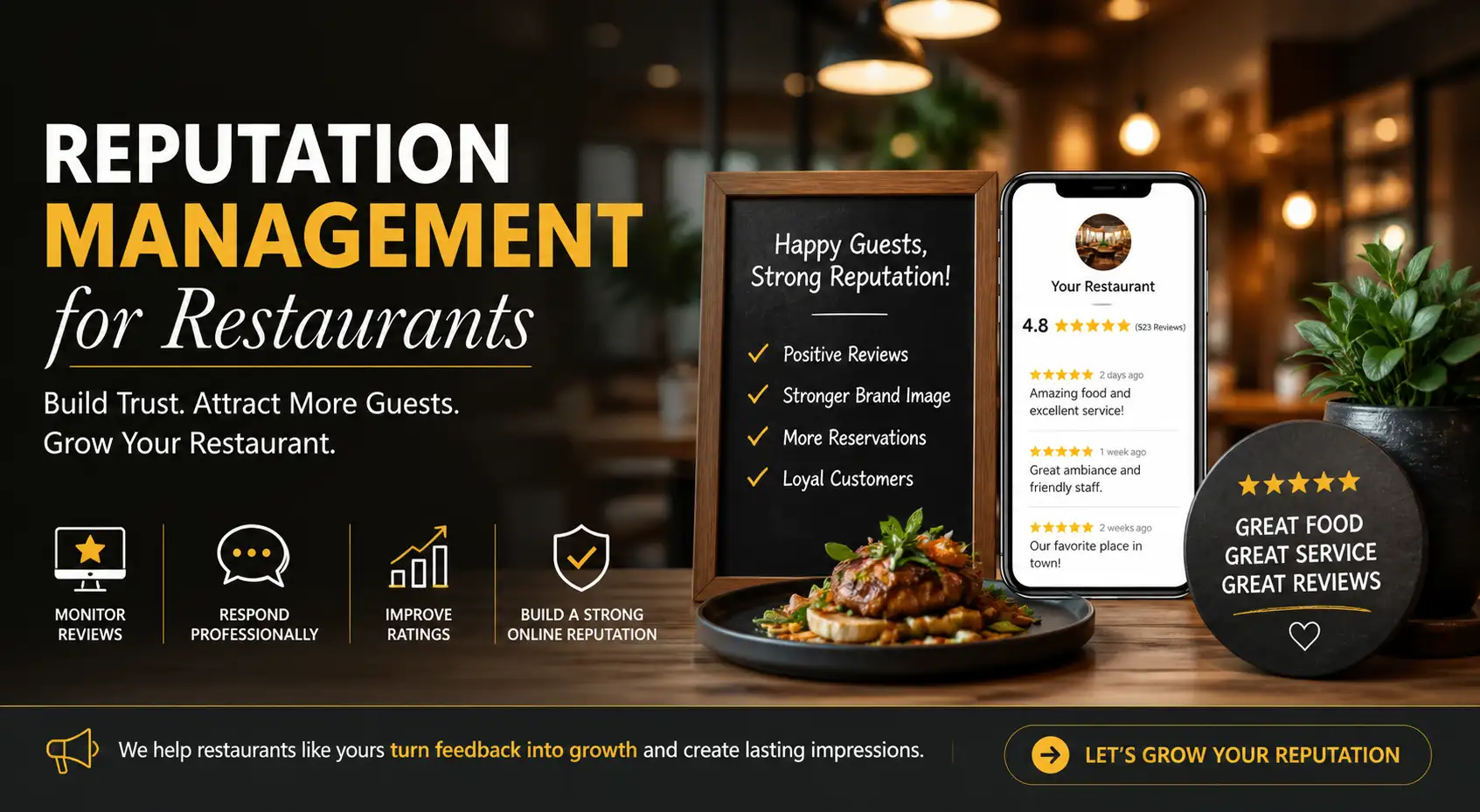
People are now judging your restaurant not just by visiting it. They are making perceptions about it online as well. All they need is a mobile phone and an internet connection, and they get all the history and decide whether your restaurant is good or not. So, building a solid reputation is important now. The reviews, ratings, responses and mentions are what can make or break your business. In fact, according to a study by BrightLocal, a platform known for local search research 97% consumers read online reviews for local businesses. In a country like India, where sites like Zomato and Swiggy influence our choice of restaurants, foods and delivery services, your online presence here becomes even more crucial. Read more to know about reputation management for restaurants and how you can do better.
Why is Reputation Management Important for Restaurants
Let’s have a look at some of the reasons why reputation management for restaurants is important for growth:
Build Trust
Even before reading the menu, people will read the reviews. If the reviews for your restaurant are high and good, it means to them that you are offering trustworthy, quality and consistent service. You don’t earn their trust by running any random ads, but only by building customer experiences. Customers don’t go to places if they don’t feel good about that place.
The more stars you have, the more customers will visit you. If you respond to the reviews well, you get better footfall. But a single negative review left on seen can make a lot of difference to the business.
Build Visibility
Google and food delivery apps prioritise restaurants based on ratings, engagement and popularity. Try to know what’s causing problems and fix it on time. Your food app presence also matters a lot because you will get customers from there as well. Reputation management for businesses will make sure you treat your delivery customers right.
Turns Feedback into Growth
A responsible owner will not overlook any feedback. You must know that feedback and word-of-mouth matter a lot. You should focus on what’s working and what is not. Taking constructive criticism will help you fix things you did not expect. So, if you make customers feel you care. Then they will also care and support you.
For example, one small restaurant listed on Zomato improved its rating from 3.6 to 4.2 by addressing delivery issues and responding to all reviews and feedback from customers. After a few months, they also started to receive more orders without having to spend more on advertisements.
The 5-Step Reputation Management for Restaurants Framework
Rather than following any random technique on the internet, you can follow these steps to enhance your reputation and sales. Here’s how you can go about your restaurant reputation management:
Step 1: Set Up and Optimize Your Presence
Start with your basics. Before anything else, make sure your online presence is under control. Being a business owner, you should claim and update Google listings, Zomato and Swiggy profiles with accurate details. Focus on using high-quality visuals on social accounts. If you build consistent and optimised presence, your reputation management will become strong, attracting more visitors. These are small things, but they’re usually the reason why one restaurant gets picked over another.
Execution tips:
- You should give only real photos of your restaurant.
- You should add proper operating hours, a menu, and contact information
- You should also work on adding keywords to get more search results.
People are searching more online rather than visiting in-person. So, building a proper digital presence will help you survive.
Step 2: Build a Consistent Review Collection System
You have given good and satisfactory service to your customers, and they enjoyed it. However, even after liking your services, they did not leave any review. Word-of-mouth matters, but having a strong digital presence is important nowadays. You should focus on creating a simple system to encourage customers to share their feedback. You can step up QR codes for review collection, follow-up messages on WhatsApp, or reminders on Google Maps and Zomato.
Execution tactics:
- You can add a QR code to a customer’s bill or table.
- You should train your employees to be polite. How they speak will have a huge impact on your services.
- You can even follow up with a WhatsApp link to remind them to review you.
When to ask for review:
- When the customer is complimenting the food
- After the customer pays, they are most satisfied
- Within a few hours of delivering the food.
Step 3: Respond Strategically to Every Review
Responses will indicate how you treat your customers. So, replying to them in a positive way is extremely important. Personalise your response to make them feel satisfied and good. Thank them for a positive review and request them to visit again.
Example: “Glad you loved the butter chicken, Rahul! Hope to serve you again soon.”
How to respond to negative reviews:
- You should acknowledge the issue rather than ignoring it.
- You should apologize as if you care about them.
- Provide them with resolution or give them a small treat to make them feel special.
Step 4: Turn Feedback into Operational Improvements
This is what many restaurants ignore. They plan to fix, but they don’t. Focusing on improving operations matters a lot, and ignoring it can be the biggest mistake for your business. Monitor complaints weekly. Classify complaints: food, service, delivery, ambience. Take action based on patterns.
Examples:
- “Food was cold”. Focus on better packaging and delivery time
- “Slow service”. Make sure you handle staff training well
- “Too noisy”. Play some soft music, not a loud one.
If you identify the root issue well, your future reviews will improve automatically. You will not need to spend heavily on marketing.
Step 5: Showcase Positive Reputation Through Content
Don’t let your dish photos sit in your phone. Use your creative mind to turn them into marketing assets. You don’t want your beautiful ambience to be for you only. So, create reels and post pictures. Let customers get fascinated by the beauty of your restaurant.
Use:
- Instagram Reels
- Customer testimonials
- Tagged posts
Execution ideas:
- Share real customer reactions in Reels
- Repost user-generated content
- Highlight top reviews weekly
Real Case Scenarios
Scenario 1: Low Ratings on Delivery Platforms Due to Food Quality Issues
Situation
You are getting a low rating on food delivery apps since customers are paying for cold or poorly packed food. Customers are not happy with the cold food and spillage since they are paying for it.
What to do
- You need to know what is causing the delay issues. Is it related to packaging, preparation, or delivery time?
- Then, think as a customer.
- You must read reviews, work on them, and let your customers know that you care about their feedback and issues.
- If you face frequent delays in delivering orders to your customers, take help from the external delivery partners. Try to find a resolution to the delivery with calmness.
Response Example: “Thanks for your valuable feedback. We are sorry to cause you trouble. We are currently working on our packaging to make sure meals stay hot and fresh during delivery.”
Fix:
- Use better insulated packaging
- Minimize the preparation-to-delivery time
- You must tightly seal the package
- Include handling instructions
Result:
If you give a better delivery experience, you will get results in higher ratings, greater customer retention, and visibility on these platforms.
Scenario 2: Not Getting Enough Reviews Despite Happy Customers
Situation: Customers like the food and enjoy all the services, but they often forget to leave reviews online. Having a positive experience, but the customer not leaving a review, hurts a lot. This will create a weak digital experience despite having a good experience.
What to do
- You need to have a proper review collection process.
- Ask for reviews when the customer is happy with the food, as timing matters.
- Give them QR codes or links.
- Follow up with them after they leave.
Execution Tactics:
- You should add QR codes to the tables, menus, or receipts that go to your review page
- Train your staff to use polite words. Experience matters a lot.
- You can follow up with a WhatsApp link like “Hey, if you enjoyed the food, would you like to leave a review?”
Result
Increasing your reviews will help you build a reputation, and your search rankings on Google will go up. What do you get? New customers.
Conclusion
In conclusion, your restaurant’s reputation is part of your growth. A customer will look at the review, how you interact with customers, and how you handle negative comments. So, focusing on reputation management for restaurants will help you win customers’ trust. Understand what scenarios can arise if you miss any particular thing. Create an execution plan for it in case you miss something by chance. If you take all these necessary steps to improve your restaurant, no one can stop customers from visiting you again.
FAQS
1. How often should I check and respond to reviews?
Ideally, daily. In a rapidly digital environment, timely replies make you look responsive and interested in customer feedback. Slow responses may make your restaurant appear unreachable or out of touch.
2. What to do with fake or unfair reviews?
Be professional and not emotional. Publish the review on the site, but also respond evenly, explaining your position. This demonstrates openness and instills confidence in readers.
3. Can reputation management really increase my bookings?
Absolutely. Increasing ratings, active interactions, and a positive online presence directly affect customer choices, resulting in increased reservations and repeat visits.
4. What’s the biggest mistake restaurants make with reputation management?
Ignoring it. Most restaurants will only respond to a situation when it goes wrong. It is the actual benefit to have your reputation steadily controlled, enhanced, and shaped before things get out of hand.