A brand’s online reputation has become one of the most important factors that influence customer decisions. Before buying a product or choosing a service, people often check reviews, social media discussions, ratings, and customer experiences shared online. A positive digital presence can create trust, while negative feedback can affect how people view a business.
Managing online reputation manually can be difficult because conversations happen across many platforms. Businesses need effective solutions to track mentions, manage reviews, and understand customer opinions. This is where Online Reputation Management Tools help companies monitor their digital image and respond to customer feedback more efficiently.
From small businesses to large companies, reputation monitoring software allows teams to collect information from different online sources, analyze customer sentiment, and improve their communication strategies. With the right approach, businesses can protect their brand identity and build stronger relationships with customers.
What Is Online Reputation Management (ORM)?
Online Reputation Management (ORM) is the process of monitoring, influencing, and maintaining how a brand appears on the internet. It includes tracking customer reviews, social media conversations, search results, and public discussions related to a company. A strong ORM strategy helps businesses understand what customers think about their products or services. It also allows brands to address complaints, appreciate positive feedback, and maintain a reliable online presence.
Online Reputation Management Tools: How Do They Work?
Online reputation management platforms work by collecting and organizing information from various online channels. They help businesses track brand mentions, customer reviews, and conversations without checking every website manually. These tools usually include several important functions:
Brand Monitoring
Brand monitoring helps businesses find mentions of their company, products, or services across the internet. It tracks discussions on social media, blogs, news websites, and other platforms.
This feature allows companies to understand public opinion and respond to important conversations quickly.
Review Management
Customer reviews have a major impact on business credibility. Review management tools help companies collect, organize, and reply to reviews from different platforms. Responding to reviews shows customers that a business values their opinions. It also helps companies identify common issues and improve their services.
Sentiment Analysis
Sentiment analysis helps businesses understand whether online conversations are positive, negative, or neutral.
By studying customer emotions and opinions, brands can identify problems early and make better decisions. This feature is useful for improving customer support and maintaining a positive reputation.
Social Listening
Social listening allows businesses to follow conversations happening around their brand. It helps companies understand customer expectations, popular topics, and public reactions. These insights can help improve marketing campaigns, customer service, and overall brand communication.
Features to Look for in ORM Software
Choosing the right reputation monitoring software depends on business needs. A useful platform should provide features that make it easier to track, analyze, and manage online feedback.
Social Media Monitoring: Social media monitoring helps brands track comments, mentions, and discussions across different platforms. It gives businesses a clear view of how customers interact with their brand online.
Real-Time Alerts: Online conversations can change quickly. Real-time alerts notify businesses about important mentions, customer complaints, or sudden changes in public opinion. Quick notifications help teams respond before small issues become larger reputation problems.
Analytics and Reporting: Analytics tools provide reports about brand performance, customer sentiment, review trends, and online visibility. These insights help businesses measure their reputation efforts and understand what areas need improvement.
Competitor Monitoring: Many ORM platforms also allow companies to observe industry trends and competitor activity. This information helps businesses understand customer expectations and improve their own reputation strategies.
Customer Feedback Management: Customer feedback management tools collect opinions from different sources and organize them into useful insights. Businesses can use this information to improve products, services, and customer experiences.
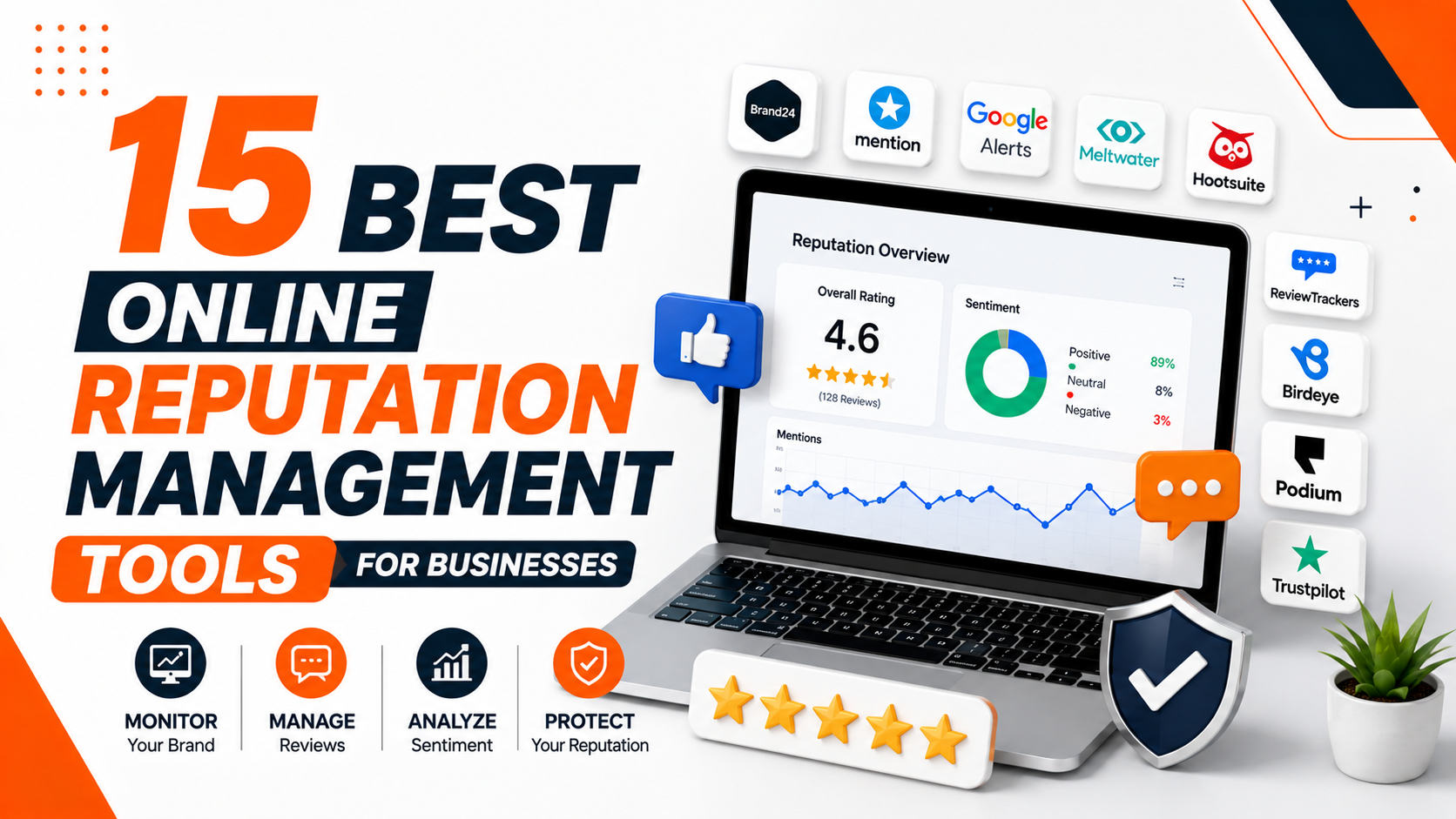
15 Best Online Reputation Management Tools
Businesses have many options when choosing reputation management software. The right platform helps companies track online conversations, manage customer reviews, understand public opinion, and maintain a positive digital image. These tools make it easier to monitor brand mentions, improve customer communication, and respond to feedback.
1. Sprout Social
Best for: Social media reputation management
Sprout Social is a widely used platform that combines social listening, publishing, analytics, and customer engagement features. It helps businesses monitor conversations happening around their brand across different social media channels.
The platform allows companies to track mentions, analyze customer reactions, and manage messages from one place. Its reporting features provide useful insights into audience behavior, social media performance, and customer interactions, making it suitable for brands that want better control over their online presence.
2. Brand24
Best for: Brand mention tracking
Brand24 helps businesses monitor online mentions from social media platforms, websites, blogs, forums, and other digital sources. It collects discussions related to a brand and presents them in an organized dashboard.
The tool provides sentiment analysis, mention alerts, and discussion tracking features. Companies can use these insights to understand how customers feel about their brand and respond to important conversations before they become bigger issues.
3. Brandwatch
Best for: Enterprise reputation monitoring
Brandwatch is designed for companies that need advanced customer insights and online monitoring solutions. It analyzes large amounts of digital data to help businesses understand public opinion and market trends.
The platform helps brands study customer behavior, track conversations, and measure brand perception. Its data-driven approach allows companies to make informed decisions based on real customer discussions and online activity.
4. Mention
Best for: Small businesses and agencies
Mention helps businesses track online conversations related to their brand, products, and services. It monitors different digital channels and sends alerts whenever the brand is discussed online.
The platform includes brand monitoring, competitor tracking, and reporting features. It allows small businesses and agencies to stay informed about customer opinions without spending hours searching different websites manually.
5. Reputation
Best for: Customer experience management
Reputation focuses on helping businesses collect customer feedback and manage their online reviews. It provides tools that allow companies to understand customer satisfaction and improve service quality.
The platform supports review monitoring, customer surveys, and reputation analytics. Businesses can use these insights to identify customer concerns, improve their services, and create better experiences for their audience.
6. Birdeye
Best for: Local businesses
Birdeye is a reputation management platform designed for businesses that depend on customer reviews and local visibility. It helps companies manage online listings, collect reviews, and communicate with customers.
The platform brings customer feedback from different sources into one place, making it easier for businesses to respond quickly. It is especially useful for companies that have multiple locations and want to maintain a consistent online reputation.
7. Podium
Best for: Customer messaging and reviews
Podium helps businesses communicate with customers through messaging tools and review collection features. It allows companies to connect with customers and request feedback through simple communication channels.
The platform helps businesses manage conversations, collect customer opinions, and improve their review ratings. It is useful for companies that want to strengthen customer relationships through faster responses.
8. Yext
Best for: Business information management
Yext helps companies manage their business information across online directories, search platforms, and digital services. It ensures that important details such as business name, location, contact information, and operating hours remain accurate.
Keeping information updated helps customers find correct details about a business. This also supports a more reliable online presence and reduces confusion caused by outdated information.
9. Google Alerts

Best for: Free reputation monitoring
Google Alerts is a free tool that helps businesses track online mentions related to specific keywords, brand names, or topics. Users can set alerts and receive notifications when new content appears online.
Although it offers basic monitoring compared to paid ORM software, it is a helpful option for businesses that want simple brand tracking. It allows companies to stay aware of online discussions without additional costs.
10. Hootsuite
Best for: Social media management
Hootsuite helps businesses manage multiple social media accounts through one dashboard. Along with content scheduling, it provides social monitoring features that help brands follow conversations and customer interactions.
The platform allows teams to respond to comments, track engagement, and understand audience reactions. It is useful for businesses that handle customer communication across several social platforms.
11. Semrush
Best for: SEO and online visibility monitoring
Semrush is a digital marketing platform that offers tools for SEO, competitor analysis, and brand monitoring. It helps businesses understand how their brand appears across search engines and online channels.
The platform allows companies to track mentions, monitor visibility, and analyze competitor activity. These insights help businesses improve their digital marketing efforts and maintain a stronger online presence.
12. Trustpilot

Best for: Customer reviews
Trustpilot is a popular review platform where customers share their experiences with businesses. Many companies use it to collect customer feedback and display reviews publicly.
The platform helps businesses understand customer opinions and respond to feedback. Positive customer experiences shared through reviews can help improve trust among potential buyers.
13. Qualtrics
Best for: Customer experience insights
Qualtrics helps businesses collect and analyze customer feedback through surveys and experience management tools. It focuses on understanding customer satisfaction and improving business performance.
The platform provides insights into customer expectations, preferences, and concerns. Businesses can use this information to improve products, services, and customer support strategies.
14. NetReputation

Best for: Reputation improvement services
NetReputation helps businesses and individuals manage their online image. The platform focuses on monitoring digital presence and addressing reputation concerns.
It assists users in understanding how they appear online and provides solutions for improving brand perception. Businesses can use reputation insights to create a more positive digital footprint.
15. Chatmeter

Best for: Multi-location businesses
Chatmeter is designed for businesses that operate across multiple locations and need local reputation monitoring. It helps companies track customer reviews, online feedback, and location-based performance.
The platform provides reputation insights that allow businesses to understand customer experiences in different areas. It helps brands maintain consistent service quality and manage their online presence across various locations.
Free Online Reputation Management Tools
Businesses that are new to reputation monitoring can start with free solutions. These tools provide basic features for tracking mentions and customer feedback.
Google Alerts
Google Alerts helps users receive notifications when new online content matches selected keywords. Businesses can use it to monitor brand names and important topics.
Google Business Profile
Google Business Profile allows companies to manage business information, reply to customer reviews, and maintain accurate details on Google.
Social Media Notifications
Most social platforms provide built-in alerts for comments, messages, and mentions. These notifications help businesses stay connected with customers.
Review Platform Alerts
Many review websites notify businesses when customers post new feedback. These alerts help companies respond quickly.
Online Reputation Management Best Practices
Managing reputation requires regular effort and consistency. Businesses should follow simple practices to maintain a positive online image.
Respond to Reviews Professionally: Both positive and negative reviews deserve attention. A polite response shows professionalism and helps build customer confidence.
Encourage Genuine Customer Feedback: Happy customers can provide valuable reviews that help others understand the quality of a business.
Monitor Online Mentions Regularly: Regular brand monitoring helps businesses stay aware of customer conversations and respond at the right time.
Maintain Clear Communication: Consistent communication across websites, social media, and customer support channels creates a reliable brand image.
Use Feedback for Improvement: Customer comments can highlight areas where a business can improve. Listening to customers helps companies provide better experiences.
Conclusion
A strong online reputation can directly influence customer trust, brand credibility, and business growth. As consumers increasingly rely on reviews, ratings, and online feedback, businesses must actively monitor and manage their digital presence. The right Online Reputation Management Tools help track brand mentions, manage reviews, analyze customer sentiment, and respond to feedback efficiently. Whether you choose a free solution or a premium platform, consistent reputation monitoring can help protect your brand image and improve customer relationships. Investing in the right ORM software ensures your business stays informed, builds trust, and maintains a positive reputation in a competitive market.