Search behavior is changing as users increasingly depend on AI systems that deliver direct answers instead of traditional search listings. Platforms like ChatGPT, Perplexity, Gemini, and Claude are now shaping how information is discovered online, with studies indicating that AI-assisted search influences a growing share of early research queries in 2024–2025.
Research in generative search behavior shows AI tools often cite only 2–5 sources per response, making visibility highly selective. In this shift, brands may still rank well on Google but fail to appear in AI-generated answers. An ai visibility tool tracks mentions, context, and presence across AI platforms, helping measure this new visibility layer in search performance.
What is an AI Visibility Tool?
It is a software system that monitors how brands, products, or content appear inside AI-generated responses. Unlike traditional SEO tools that focus on keyword rankings or SERP positions, AI visibility tools focus on how AI models interpret and present your brand.
These tools typically measure brand mentions inside AI answers, analyze how the brand is described, compare visibility against competitors, and track how often a brand appears across multiple AI platforms. This process is also known as LLM visibility tracking or AI answer monitoring.
Research in Generative Engine Optimization (GEO) from 2024 highlights an important insight. Brands that consistently appear in AI-generated answers tend to gain stronger early-stage discovery signals, while missing from AI responses can reduce visibility in conversational search journeys by around 20–30% in controlled testing environments. This makes AI visibility tracking an important part of modern search strategy.
How AI Visibility Tools Work
AI visibility tools function by simulating real user queries and analyzing how AI systems respond to them.
Prompt Testing System
These tools generate structured prompts similar to real user searches, such as “best AI marketing tools” or “top SEO platforms for startups.” Each response is collected and analyzed to determine whether a brand appears, how it is described, and how it compares to competitors.
Industry usage patterns suggest that advanced systems may run thousands of prompt variations each month to detect changes in visibility trends across categories.
Multi-AI Tracking
Most tools monitor several AI platforms at the same time, including ChatGPT, Perplexity AI, Google AI Overviews, and Claude.
Research in generative search behavior shows that responses can vary significantly across platforms. In some cases, brand inclusion differences between AI systems can reach 30–45%, depending on the query type and model behavior.
Citation and Source Mapping
Some AI visibility systems also analyze which websites are being used as sources for AI-generated responses. They track whether your content is cited, how competitors are referenced, and which domains are most frequently used as supporting material.
This helps in understanding how information flows into AI-generated answers and why certain brands are prioritized.
Key Features of AI Brand Visibility Tools
These tools provide multiple tracking layers that help measure performance inside AI-generated search systems.
- Brand Mention Tracking: This feature measures how often a brand appears in AI-generated responses across different prompts. Early GEO studies suggest that strong-performing brands can appear in 15–25% of relevant AI prompts, depending on niche competitiveness and content authority.
- Competitor Benchmarking: This function compares your brand visibility with competitors in the same category. Example insight: Competitor appears in 40% of AI answers, and your brand appears in 12%. This clearly highlights a visibility gap in AI-driven discovery and helps identify areas for improvement.
- Share of Voice Share of voice measures how dominant your brand is in AI-generated responses compared to competitors. Industry tracking reports suggest that brands actively monitoring AI visibility can achieve 20%+ improvement in category-level presence over time, depending on optimization efforts and content structure.
- Sentiment Tracking: This feature analyzes how AI systems describe your brand in responses. It typically evaluates: Positive framing, Neutral mentions, Missing or incomplete context. Sentiment tracking helps identify how AI systems interpret your brand identity, which can directly affect user perception during early discovery.
Best AI Visibility Tools
AI visibility tools focus on tracking how often your brand appears inside AI-generated answers across systems like ChatGPT, Perplexity, Gemini, and Claude. This category is still developing, but a few platforms have become widely discussed in GEO and AI SEO communities.
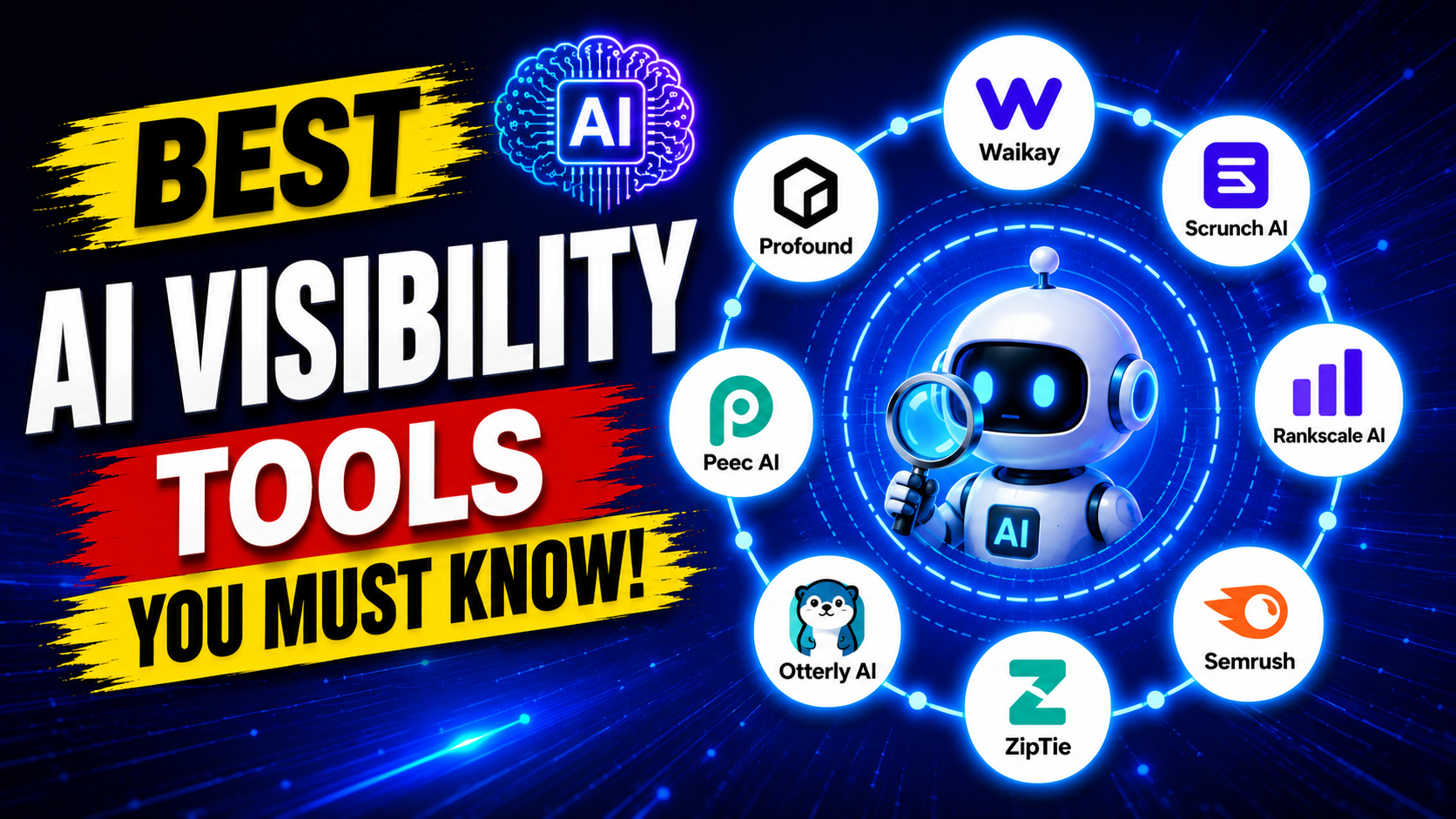
1. Profound

Profound is positioned as an enterprise-level AI visibility platform built for large-scale tracking of AI-generated responses. It focuses on how brands appear across multiple language models and how frequently they are included in answers. It is commonly used by teams that require structured visibility reporting and competitor analysis at scale.
Pros
- Strong coverage across multiple AI models
- Detailed tracking of prompt-level responses
- Suitable for enterprise GEO strategy
Cons
- High cost compared to other tools
- Requires onboarding time to understand features
- Not ideal for small teams or beginners
2. Peec AI
Peec AI is designed for teams that want straightforward monitoring of brand presence inside AI-generated answers. It is widely used by marketing teams and agencies that manage multiple clients. The tool focuses on tracking mentions across different AI systems and showing how often a brand appears in responses compared to competitors.
Pros
- Simple interface and easy setup
- Useful for agency-level tracking
- Good balance between cost and functionality
Cons
- Limited historical reporting depth
- Smaller ecosystem compared to older SEO platforms
- Still evolving feature set
3. Otterly AI
Otterly AI focuses on basic AI visibility tracking and is often used by smaller businesses or teams new to generative search monitoring. It helps users understand whether their brand is being mentioned in AI responses and provides simple visibility insights without complex configuration.
Pros
- Easy to use with minimal setup
- Affordable entry option
- Clear basic AI mention tracking
Cons
- Limited advanced analytics
- Not suitable for large-scale enterprise use
- Fewer competitive intelligence features
4. ZipTie
ZipTie focuses on tracking how content appears in AI-generated answers and how often it is cited by AI systems. It is mainly used for GEO-focused optimization strategies. The tool helps identify whether content is being used as a source in AI answers, which is becoming important in generative search environments.
Pros
- Strong focus on AI citation tracking
- Useful for GEO optimization workflows
- Clean reporting structure
Cons
- Limited dataset coverage compared to larger platforms
- Still developing advanced analytics capabilities
- Not widely adopted yet
5. Semrush
Semrush is primarily a traditional SEO platform, but it has started introducing AI-related visibility insights as search behavior shifts toward generative systems.
While it is not a dedicated AI brand visibility tool, it is still used in GEO strategies because of its strong keyword intelligence and competitive analysis features.
Pros
- Strong SEO and keyword research system
- Trusted global platform used by marketers
- Useful for supporting AI visibility strategy indirectly
Cons
- AI visibility features are still limited
- Focus remains on traditional search SEO
- Not built specifically for LLM tracking
6. Rankscale AI
Rankscale AI is focused on measuring how brands perform inside AI search ecosystems. It is designed for teams working on Generative Engine Optimization (GEO) and AI-driven content strategies.
The tool tracks visibility patterns across AI platforms and helps identify where brands appear in comparison to competitors.
Pros
- Focused on AI search ranking signals
- Useful for GEO performance tracking
- Helps compare visibility across prompts
Cons
- New platform with limited case studies
- Feature set still evolving
- Smaller user adoption base
7. Scrunch AI

Scrunch AI focuses on how brands are represented inside AI-generated answers and how that representation can be improved over time.
It is often used by larger marketing teams that want to monitor brand perception inside AI systems and adjust content strategy accordingly.
Pros
- Strong focus on brand representation in AI responses
- Useful for enterprise-level strategy planning
- Helps improve AI-driven brand perception
Cons
- Limited public documentation
- Not widely accessible for small businesses
- Early-stage adoption in the market
8. Waikay
Waikay is a lightweight AI visibility tracking tool designed for simple monitoring of brand presence inside AI-generated answers.
It is often used by smaller teams that want basic visibility insights without complex dashboards.
Pros
- Easy onboarding and setup
- Simple visibility tracking system
- Suitable for small teams and startups
Cons
- Limited analytics depth
- Smaller dataset coverage
- Not suitable for enterprise-scale reporting
Benefits of AI Visibility Platforms
These are becoming important because they show how brands are interpreted inside AI-generated responses rather than just how they rank on search engines.
One major benefit is clarity in brand exposure. Many companies discover that they are frequently missing from AI answers even when they perform well in traditional search rankings. This gap directly affects early-stage discovery.
Another benefit is competitive awareness. These tools make it easier to see which competitors are consistently recommended by AI systems and in what context they appear. This helps identify content gaps and missed opportunities.
Industry observations from GEO tracking experiments suggest that brands actively monitoring AI visibility tend to identify content gaps earlier than those relying only on SEO dashboards.
Challenges of AI Visibility Tools
Despite their usefulness, AI visibility tools face limitations because the AI search ecosystem is still changing.
One major challenge is lack of standard ranking systems. Unlike Google search, AI systems do not follow fixed ranking rules, which makes measurement less predictable.
Another issue is model inconsistency. The same query can produce different answers across different AI platforms, which leads to varying visibility results.
Data interpretation is also a challenge. Even when a brand appears in an AI response, it is not always clear how much influence that mention has on user decisions.
Future of AI Visibility Platform
AI visibility tools are expected to grow as generative search becomes a key way users find information online. Studies from 2024–2025 show that AI-driven answers are already influencing early-stage research queries, reducing reliance on traditional search result pages.
Research on generative search behavior indicates that AI systems often rely on a small number of trusted sources per response. This has increased demand for tools that can measure and predict brand inclusion inside AI-generated answers.
In the coming years, AI visibility platforms are likely to adopt prediction-based features that estimate how content may appear in AI responses before it is published. This will help marketers adjust structure and relevance early in the content process.
Industry direction suggests that AI visibility tracking will become a standard SEO metric, similar to keyword rankings in traditional search optimization.
Conclusion
AI search is changing how users discover information, with platforms like ChatGPT, Perplexity, Gemini, and Claude delivering direct answers instead of traditional search results. Studies in generative search behavior show that AI systems rely on a limited set of sources, making brand inclusion highly selective and competitive. This means even high-ranking websites may not always appear in AI-generated responses. An ai visibility tool helps track brand mentions, competitor presence, sentiment, and citation patterns across AI platforms. It provides clear insight into how a brand is represented in AI-driven discovery. As this shift continues, AI visibility tracking will become a key SEO metric.
FAQs
1. What is an AI visibility tool?
It is software that tracks how often a brand, product, or website appears inside AI-generated responses from platforms like ChatGPT, Perplexity, Gemini, and Claude. It also analyzes context, competitor presence, and citation patterns to measure visibility in AI search.
2. How is an AI brand visibility tool different from SEO tools?
SEO tools focus on keyword rankings and search engine results pages, while AI brand visibility tools focus on whether your brand appears in AI-generated answers. They measure LLM visibility, brand mentions, and AI-driven discovery instead of traditional SERP positions.
3. Why is AI visibility important for businesses?
AI systems are becoming a primary source of information for users. Research shows that AI answers often use only a small set of sources, which means many brands get excluded. These tools help businesses understand and improve their presence in these answers.
4. Which AI platforms do visibility tools track?
Most AI visibility tools track multiple platforms, including ChatGPT, Perplexity AI, Google AI Overviews, and Claude. These platforms are widely used in generative search, where answers are created instead of shown as links.
5. Can small businesses use AI visibility tools?
Yes, these tools have simple and affordable options for small businesses. While enterprise tools provide advanced analytics, lightweight platforms still help track basic brand mentions and visibility in AI-generated responses.